Online MAGA cope is now Congressional strategy

Right-wing influencers try blaming Democrats for hiding the Epstein files — and DC Republicans follow suit.

Right-wing influencers try blaming Democrats for hiding the Epstein files — and DC Republicans follow suit.

President Trump Hosts A Reception For GOP Members Of Congress
Tina Nguyen
Tina Nguyen is a senior reporter for The Verge, covering the Trump administration, Elon Musk’s takeover of the federal government, and the tech industry’s embrace of the MAGA movement.

When it comes to defending Donald Trump from the worst accusations, the MAGA influencer-industrial complex, whether out of loyalty or self-preservation, often defaults to whataboutism, arguing that the Democrats are just as guilty as Trump, or (ideally) worse. This principle has held true with the current Jeffrey Epstein saga, and as their audience’s anger against the Trump administration skyrockets, the MAGA influencer world is trying a new tack: blame the Democrats, not Trump, for keeping the “Epstein Files” under lock and key.

Trump, the person who could feasibly order the release of said documents, has spent the past few weeks trying to smother the drama from a few different angles, ultimately only fanning flames every time he attempted to deemphasize Epstein. He tried dismissing it during a Cabinet meeting (“Are you still talking about Jeffrey Epstein?”), downplaying it on Truth Social (“Let’s … not waste Time and Energy on Jeffrey Epstein, somebody that nobody cares about”), and criticizing a reporter for asking about Epstein (“Are people still talking about this guy?”).

But there’s no indication that the MAGA-influencer complex will ever stop talking about Epstein, or that their audiences will ever let it go. But over the past week, the influencer class, and subsequently the GOP, has started to maneuver Trump’s spin into a more acceptable talking point, inspired by a recent Wall Street Journal bombshell reporting that the Justice Department had told Trump back in May that his name was in the pile of documents related to Jeffrey Epstein. “Of course there’s going to be mentions of Epstein, who was a member of Mar-a-Lago until Trump kicked him out” over a decade ago, said Alex Jones, the Infowars host who’d spent the past several days raging about the Epstein Files. But while he had been calling for the head of anyone in the administration for failing to deliver, it was much easier to circle the wagon around Trump the moment that a mainstream publication tied him to bad behavior.

Laura Loomer, another prominent influencer who’d been criticizing the administration for its underwhelming response, also took the opportunity to try coming home by questioning where exactly Trump’s name appeared in the files, while also glazing Trump. “Are they trying to say that a file is somebody’s name in an address book?” she rhetorically asked Politico Playbook on Thursday, adding that she, too, had a large address book. “Some of those people in my address book have committed crimes. Does that mean I’m implicated in their crimes? President Trump is not a pedophile. And I look forward to seeing him sue every journalist and publication that is trying to imply that he is one.”

In the days and weeks since the Trump administration released their brief memo about the Epstein files, the MAGA influencer world — specifically, those who built their careers “just asking questions” about Epstein while also cozying up to Trump — has grappled with a difficult choice: either cater to their audience’s demand to keep asking what the elites are hiding about Epstein, or maintain their relationship and standing with the White House.

Some have chosen their audiences, gambling that their following is loyal beyond Trump, and that their influence isn’t contingent on their White House access. (Tucker Carlson, for instance, published a two-hour episode that was entirely focused on the Epstein conspiracies — one week after he implied that Epstein was a Mossad agent.) Others have completely flipped back to Trump, such as the influencer Catturd, an onetime Epstein truther who began implying that “the podcast bro ‘influencers’” now criticizing Trump may have taken Russian money to do so. (In 2024, US prosecutors indicted two employees of RT for illegally funneling money to spread Kremlin propaganda, alleging that they had put $10 million into a Tennessee-based media company whose description matched up with Tenet Media, which worked with Tim Pool, Benny Johnson, and others.) Catturd then tweeted that he was “never abandoning Trump”, and spent the subsequent week calling for Barack Obama’s indictment and posting memes of press secretary Karoline Leavitt.

But for everyone else, it’s been difficult to have it both ways. Loomer’s attempt to pin the blame on Attorney General Pam Bondi, for instance, failed when Trump refused to fire Bondi, while influencers who attempted to convince their audience to move onto different topics saw their audience revolt (particularly if those influencers, such as Benny Johnson, cited their conversations with government officials as reason enough).

And before you dismiss it as sturm-and-drang on the internet, the very same dynamic can be seen in Congress, where the Republicans are trying their best to satisfy the base while appeasing the President — a task made difficult because their normal, everyday constituents also hold deep suspicions about the entire Epstein matter. A Reuters/Ipsos poll released last week found that the vast majority of voters — including a majority of Republicans — believe that the government is hiding information about the infamous “client list”. And tellingly, only 35 percent of Republicans believed that the Trump administration was handling it well. (30 percent said Trump was not, and 35 percent were unsure.)

On Wednesday, a House Oversight subcommittee voted to subpoena the Department of Justice for the Epstein Files, with a majority composed of five Democrats and three Republicans. The two Republicans who opposed the subpoena ended up tacking on other requests for Epstein-related communications from Biden officials and the DOJ. Per ABC News, the “officials” included the Democratic subjects of MAGA’s most enduring conspiracy theories: “Bill and Hillary Clinton, James Comey, Loretta Lynch, Eric Holder, Merrick Garland, Robert Mueller, William Barr, Jeff Sessions and Alberto Gonzales.”

In other words, no one seems to be able to run with Trump’s assessment that Epstein is “somebody that nobody cares about.” Unable to quell the belief that there’s a conspiracy afoot, the only thing to do is try to implicate Democrats. Even Speaker Mike Johnson, who abruptly called a five-week recess last Thursday to prevent his Democratic counterparts from voting to release the Epstein files, leaned in on a potential conspiracy. “One of our concerns is, of course, that it was held in the hands of the DOJ leaders under the last administration, the Biden-Harris administration,” he told a Newsmax reporter on Wednesday. “And we all know how crooked and corrupt so many of those officials were, how they engaged in lawfare against President Trump. He has a concern, and I do as well, that things could have been doctored in those records.” When it comes to right-wing talking points based on sordid, unproven allegations, it’s best to start winking early — and in sync with the president, too.

Follow topics and authors from this story to see more like this in your personalized homepage feed and to receive email updates.

Most Popular

Similar Posts

  • Razer Pro Click V2 Vertical Review: A Hybrid Gaming Mouse

    Switching to a vertical mouse is a hard sell. Having to change how you use a mouse completely can be an intimidating task, especially with how unnatural the new hand position feels at first—you’re going entirely against the muscle memory you’ve spent years building up.One of the largest challenges to the switch is the initial loss of pointer accuracy. If you’re in an office setting, you may find yourself wandering around a bit or struggling to move your new mouse as quickly as you did before. But in a slow-paced setting like that, all you struggle with is a few mis-clicks or slightly slower navigation. If you try to make this transition with gaming, it’s far more jarring, and the consequences are much more immediately noticeable.But even if it’s difficult to adapt to, could vertical mice be the future of gaming? Razer’s new Pro Click V2 Vertical Edition is a hybrid productivity and gaming vertical mouse. Vertical mice typically cater to office workers, but the focus on gaming performance makes the $120 Pro Click V2 one of a kind.Desk PresenceThe Pro Click V2 Vertical looks, more than anything else, like a modern gaming mouse. It has the textured exterior, metallic highlights, and slightly organic, H.R. Giger-esque curvature typical of Razer’s design language. But everything has been shifted around. The curved, cutting thumb rest sits on top of the mouse instead of on the side. A flare juts out from the right side as a place to rest the underside of your hand. The gunmetal highlight sits at the peak of the mouse rather than between the two buttons. Even the USB port is vertical, a humorous attention to detail.It’s intentionally designed as a gaming mouse that just happens to be vertical. Aesthetically, the only downside is the minimal RGB lighting. With only one section of lighting that runs along the bottom of the mouse, RGB lighting fans might feel disappointed. Still, it’s bright, reactive, and has great color accuracy. It’s more than enough for me, especially with how customizable it is with Razer’s Chroma software.The Pro Click V2 Vertical has the same specs as the standard Pro Click V2, with a 1,000-Hz polling rate, a 2.4-GHz dongle that can be stored on the underside, Bluetooth multi-device connectivity, and a reprogrammable button on top. The only features lost are the mouse wheel’s horizontal scrolling and toggleable non-ratcheted rotation.This mouse includes two major productivity features: app-specific profiles and multi-device connectivity, and both work effortlessly. Razer Synapse immediately detected different software and changed the active profile in response, and pressing the button on the underside of the mouse swapped between paired devices instantaneously.Beyond that, Razer Synapse is as impressive as always. I consistently find the software to be one of the best and most intuitive on the market, and that’s the case here. All of the menus are simple and efficient, the settings can be changed in real time, and the adjustments all have tooltips and explanations to tell you exactly what you’re changing.Annoyingly, Razer Synapse has advertisements on the homepage, something I’ve complained about when reviewing SteelSeries products in the past. However, unlike Steelseries GG, these “recommendations” can be permanently disabled in the app’s settings.Performance and PracticeThe overall hand position of the Pro Click V2 Vertical is natural, but incredibly upright. While some vertical mice, like those from Logitech or Hansker, find a middle ground between a standard and truly “vertical” hand position, Razer opted for a nearly perpendicular shape. While this is technically an ideal ergonomic shape, it will be harder to adapt if you’re moving directly from a standard mouse, and might not be as comfortable during the adjustment period.It felt unnatural for the first week or so, and required practice to use comfortably and confidently. Once I had acclimated, my speed and accuracy were nearly at the same level as a standard mouse, although consistent use still felt clunky and unfamiliar compared to the horizontal mice I’d been using for most of my life.

  • Our first long-duration energy storage partnership

    Electricity powers modern life. And we’re accelerating a wide range of technologies, from enhanced geothermal to advanced nuclear to even fusion technologies, that can enable a future where on-demand electricity needs are met with clean energy, every hour of every day.Today, we’re adding another technology to our portfolio: long duration energy storage (LDES). Through a new long-term partnership with Energy Dome, we plan to support multiple commercial projects globally to deploy their LDES technology.Energy Dome’s novel CO₂ Battery can store excess clean energy and then dispatch it back to the grid for 8-24 hours, bridging the gap between when renewable energy is generated and when it is needed. With this commercial partnership, as well as an investment in the company, we believe these projects can unlock new clean energy for grids where we operate before 2030, helping meet near-term electricity system needs and moving us closer to our 24/7 carbon-free energy goal.By bringing this first-of-a-kind LDES technology to market faster, we aim to rapidly bring its potential to communities everywhere — making reliable, affordable electricity available around the clock and supporting the resilience of grids as they integrate growing amounts of renewable energy sources.Why it’s importantLithium-ion batteries, which typically store and dispatch power for 4 hours or less, have been critical for adding electricity capacity to grids and managing short-term fluctuations in renewable generation — when the sun isn’t shining or the wind isn’t blowing. Google’s support for these shorter-duration batteries has helped the grids we rely on, from Belgium to Nevada, meet peak electricity demand and reduce the need to ramp up fossil fuel power plants.But what if we could store and dispatch clean energy for more than a few hours, or even a full day? Studies by the Electric Power Research Institute show that LDES technologies can cost-effectively integrate a growing volume of renewables onto power systems and contribute to more flexible, reliable grids. The LDES Council estimates that deploying up to 8 terawatts (TW) of LDES by 2040 could result in $540 billion in annual savings globally, thanks in part to their ability to optimize grids.How the technology worksEnergy Dome’s novel approach to energy storage uses carbon dioxide (CO₂) held in a unique dome-shaped battery. When there’s an abundance of renewable energy on the grid, the system uses that power to compress CO₂ gas into a liquid. When the grid needs more clean power, the liquid CO₂ expands back into a hot gas under pressure, creating a powerful force — much like steam escaping a pressure cooker — which spins a turbine. This spinning turbine generates carbon-free energy that can flow directly back into the grid for durations ranging from 8 to 24 hours.Energy Dome has already signed contracts to build commercial scale projects in Italy, the U.S., and India. And their technology has already proven successful, having injected electrons into the Italian grid for more than three years, thanks to their commercial demonstration facility and now with their full-scale 20 megawatt (MW) commercial plant in Sardinia, Italy.Why scale is crucialLDES has the potential to commercialize much faster than some of the other advanced clean energy technologies in our portfolio. This means we can use it in the near term to help the electricity system grow more flexibly and reliably, alongside other tools we’re developing such as data center demand response.By supporting multiple commercial deployments of Energy Dome’s technology globally, we aim to bring this technology to scale faster and at lower costs. Beyond our long-term collaboration with Energy Dome, we plan to support a growing range of LDES technologies under development through both commercial agreements that can catalyze wider market adoption of more mature technologies, like Energy Dome’s, as well as earlier-stage investments.To remove barriers to the deployment and commercialization of LDES and other advanced carbon-free energy technologies, we’re also advocating for clean energy policies, ensuring that energy markets fully value firm, flexible carbon-free technologies, and advancing policy measures that enable infrastructure essential for grid decarbonization and energy security.We’re excited to take this first step with Energy Dome to unlock the full potential of LDES. Our partnership will strengthen grid resilience while enabling us to power our technologies, grow our economies and keep the lights on in our homes with 24/7 clean energy.

  • Web Guide: An experimental AI-organized search results page

    We’re launching Web Guide, a Search Labs experiment that uses AI to intelligently organize the search results page, making it easier to find information and web pages.Web Guide groups web links in helpful ways — like pages related to specific aspects of your query. Under the hood, Web Guide uses a custom version of Gemini to better understand both a search query and content on the web, creating more powerful search capabilities that better surface web pages you may not have previously discovered. Similar to AI Mode, Web Guide uses a query fan-out technique, concurrently issuing multiple related searches to identify the most relevant results.For example, try it for open-ended searches like “how to solo travel in Japan.” Or try detailed queries in multiple sentences like, “My family is spread across multiple time zones. What are the best tools for staying connected and maintaining close relationships despite the distance?”

  • Get paid faster: How Intuit’s new AI agents help businesses get funds up to 5 days faster and save 12 hours a month with autonomous workflows

    Join the event trusted by enterprise leaders for nearly two decades. VB Transform brings together the people building real enterprise AI strategy. Learn more Intuit has been on a journey over the last several years with generative AI, incorporating the technology as part of its services at QuickBooks, Credit Karma,Turbotax and Mailchimp. Today the company is…

  • Obvio’s stop sign cameras use AI to root out unsafe drivers

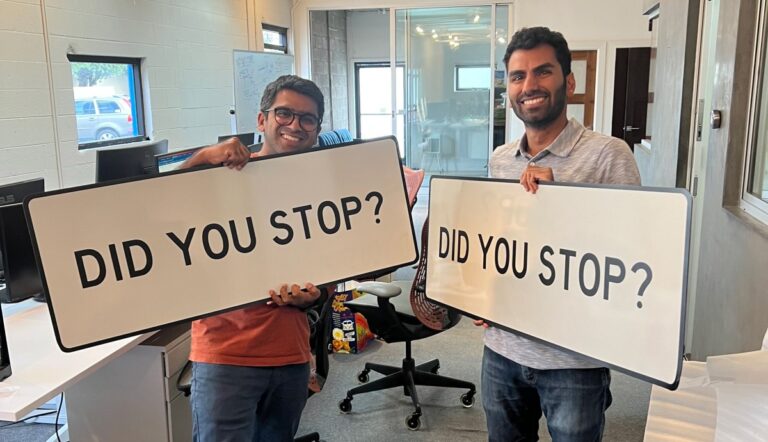
    American streets are incredibly dangerous for pedestrians. A San Carlos, California-based startup called Obvio thinks it can change that by installing cameras at stop signs — a solution the founders also say won’t create a panopticon. 

    That’s a bold claim at a time when other companies like Flock have been criticized for how its license plate-reading cameras have become a crucial tool in an overreaching surveillance state. 

    Obvio founders Ali Rehan and Dhruv Maheshwari believe they can build a big enough business without indulging those worst impulses. They’ve designed the product with surveillance and data-sharing limitations to ensure they can follow through with that claim.

    They’ve found deep pockets willing to believe them, too. The company has just completed a $22 million Series A funding round led by Bain Capital Ventures. Obvio plans to use those funds to expand beyond the first five cities where it’s currently operating in Maryland. 

    Rehan and Maheshwari met while working at Motive, a company that makes dashboard cameras for the trucking industry. While there, Maheshwari told TechCrunch the pair realized “a lot of other normal passenger vehicles are awful drivers.” 

    The founders said they were stunned the more they looked into road safety. Not only were streets and crosswalks getting more dangerous for pedestrians, but in their eyes, the U.S. was also falling behind on enforcement. 

    [embedded content]

    “Most other countries are actually pretty good at this,” Maheshwari said. “They have speed camera technology. They have a good culture of driving safety. The U.S. is actually one of the worst across all the modern nations.”

    Maheshwari and Rehan began studying up on road safety by reading books and attending conferences. They found that people in the industry gravitated toward three general solutions: education, engineering, and enforcement. 

    In their eyes, those approaches were often too separated from each other. It’s hard to quantify the impact of educational efforts. Local officials may try to fix a problematic intersection by, say, installing a roundabout, but that can take years of work and millions of dollars. And law enforcement can’t camp out at every stop sign.

    Rehan and Maheshwari saw promise in combining them. 

    The result is a pylon (often brightly-colored) topped with a solar-powered camera that can be installed near almost any intersection. It’s designed not to blend in — part of the education and awareness aspect — and it’s also carefully engineered to be cheap and easy to install.

    The on-device AI is trained to spot the worst types of stop sign or other infractions. (The company also claims on its website it can catch speeding, crosswalk violations, illegal turns, unsafe lane changes, and even distracted driving.) When one of these things happen, the system matches a car’s license plate to the state’s DMV database. 

    All of that information — the accuracy of the violation, the license plate — is verified by either Obvio staff or contractors before it’s sent to law enforcement, which then has to review the infractions before issuing a citation.

    Obvio gives the tech to municipalities for free and makes money from the citations. Exactly how that citation revenue will get split between Obvio and the governments will vary from place to place, as Maheshwari said regulations about such agreements differ by state.

    That clearly creates an incentive for increasing the number of citations. But Rehan and Maheshwari said they can build a business around stopping the worst offenses across a wide swath of American cities. They also said they want Obvio to remain present in — and responsive to — the communities that use their tech.

    “Automated enforcement should be used in conjunction with community advocacy and community support, it shouldn’t be this camera that you put up that does revenue grab[s] and gotchas,” Maheshwari said. The goal is to “start using these cameras in a way to warn and deter the most egregious drivers [so] you can actually create communitywide support and behavior change.”

    Cities and their citizens “need to trust us,” Maheshwari said. 

    There’s also a technological explanation for why Obvio’s cameras may not become an overpowered surveillance tool for law enforcement beyond their intended use.

    Obvio’s camera pylon records and processes its footage locally. It’s only when a violation is spotted that the footage leaves the device. Otherwise, all other footage of vehicles and pedestrians passing through a given intersection stays on the device for about 12 hours before it gets deleted. (The footage is also technically owned by the municipalities, which have remote access.)

    This doesn’t eliminate the chance that law enforcement will use the footage to surveil citizens in other ways. But it does reduce that chance.

    That focus is what drove Bain Capital Ventures partner Ajay Agarwal to invest in Obvio.

    “Yes, in the short term, you can maximize profits, and erode those values, but I think over time, it will limit the ability of this company to be ubiquitous. It’ll create enemies or create people who don’t want this,” he told TechCrunch. “Great founders are willing to sacrifice entire lines of business, frankly, and lots of revenue, in pursuit of the ultimate mission.”

Leave a Reply

Your email address will not be published. Required fields are marked *
