Here are the laptops I’d tell any parent to consider for their back-to-school student

If your back-to-school planning for this year calls for a new laptop, here are your best bets.

If your back-to-school planning for this year calls for a new laptop, here are your best bets.

257862_back_to_school_laptop_buying_guide_CVirginia
Antonio G. Di Benedetto
Antonio G. Di Benedetto is a reviewer covering laptops and the occasional gadget. He spent over 15 years in the photography industry before joining The Verge as a deals writer in 2021.

We’re in the heart of summer fun, but it’s already time for back-to-school planning, especially if that involves buying a new laptop.

The dizzying number of different laptops and configurations can feel overwhelming, especially if you want something that doesn’t cost too much but will still last a long time. My general guidelines are to first pick the operating system you need (based on personal preference or class requirements), and then get the best specs you can afford. If your school has specific requirements or recommendations, they are likely found on the school website. A quality laptop should also have a good screen, keyboard, and trackpad — and preferably enough ports and some decent speakers.

Unless you’re buying a Chromebook, aim for an M4 processor (for Macs) or an Intel Core Ultra 5 or 7, an AMD Ryzen AI 300 series, or a Qualcomm Snapdragon X processor on a Windows machine, especially if you want your laptop to last at least four years. Aim for at least 16GB of RAM and 512GB of storage. If your budget allows for more RAM or storage then go for it, especially if neither is user-replaceable — it’ll help with performance and longevity. If you have to choose based on budget, prioritize RAM, since external storage is easily available.

What we’re looking for

The Verge tests laptops with an emphasis on real-world use. That means I use it for everyday work, which is not too different from the way many college students would work: getting a feel for multitasking performance while running lots of apps and browser tabs, running the battery down to see how long it lasts, and spending ample time with the laptop as my primary computer. I also run some synthetic benchmarks to quantify things like graphics processing, but, just like a student, a laptop is more than its test scores.

Much like our general buying guide, I’m looking for laptops with all-day battery life and decent performance for a good price. Keeping students and family budgets in mind, it should be a machine that can last five or more school years before getting bogged down or feeling outdated.

A good keyboard and quality trackpad are essential, especially since students in classrooms are less likely to plug in peripherals. The keyboard should be pleasant to type on, durable, and ideally backlit. The trackpad should be accurate and big enough to use comfortably.

Screen size can come down to preference, since what you give up in size is typically made up in portability. In most cases, around 13 inches is as small as you want to go, with 16 inches being the maximum before things get unwieldy. A 14-incher is a happy middle ground (and represented by more than half of our picks here). Aim for at least a 1920 x 1080 / 60Hz display that gets fairly bright, though higher is better, especially on larger screens, if it doesn’t get too expensive.

A student’s laptop should be well built and portable. For younger kids especially, it should be durable. For older kids and young adults, it should be easy to repair or at least readily serviceable to last as many years as possible.

A student laptop should be able to get through a student’s day of classes without needing to be constantly charged.

For ports, at least a couple of USB-C are essential.

Taking much of that into account, here are our top picks among current laptops.

The best laptop for most students
9

Verge Score

The Good

  • Easily lasts a full day on battery
  • Excellent choice for most people’s everyday needs
  • Nails the basics in a thin-and-light while feeling like a nice place to be

The Bad

  • Still starts with just 256GB of storage
  • Still has limited ports
  • Still prone to throttling under heavy creative tasks

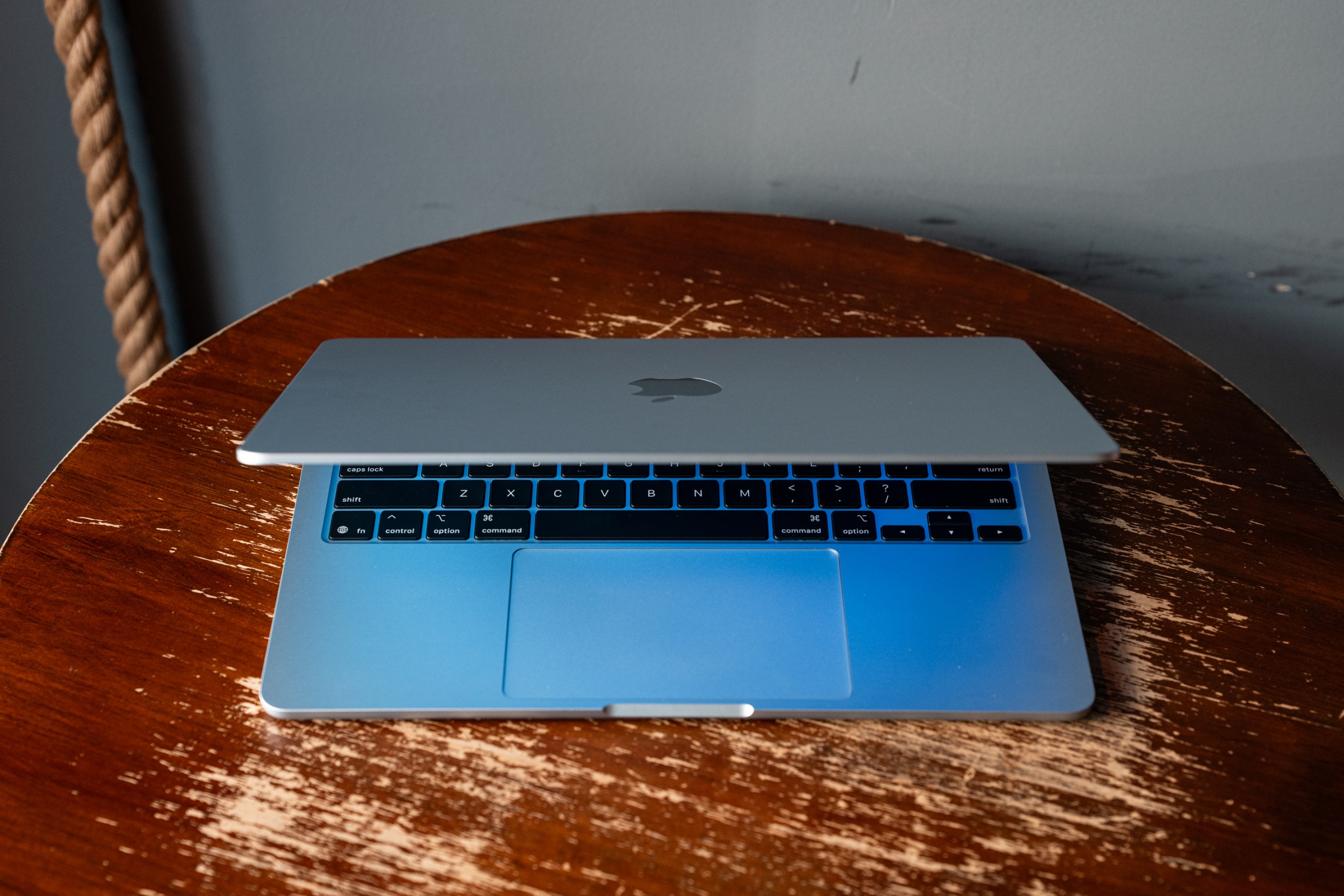
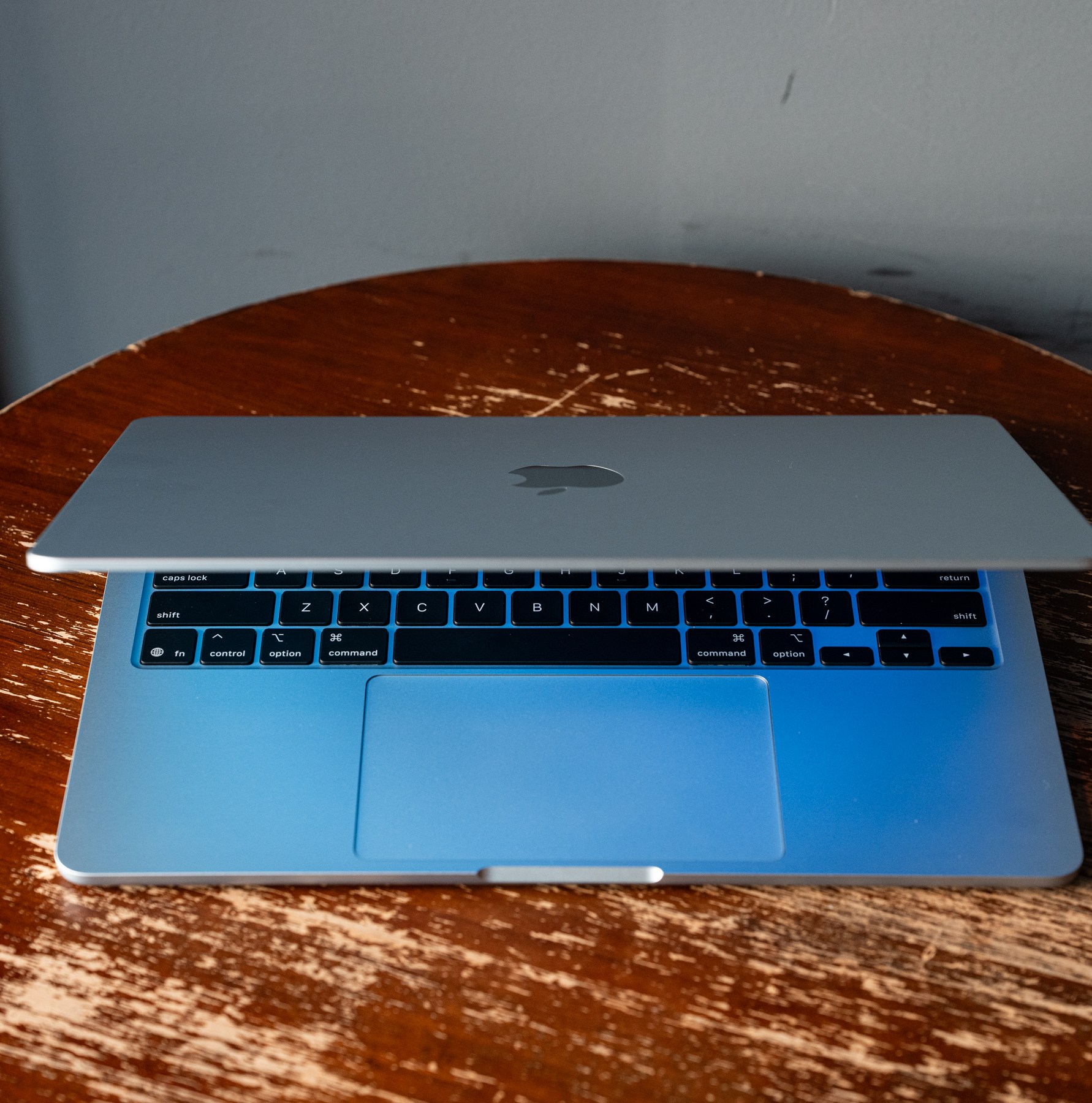
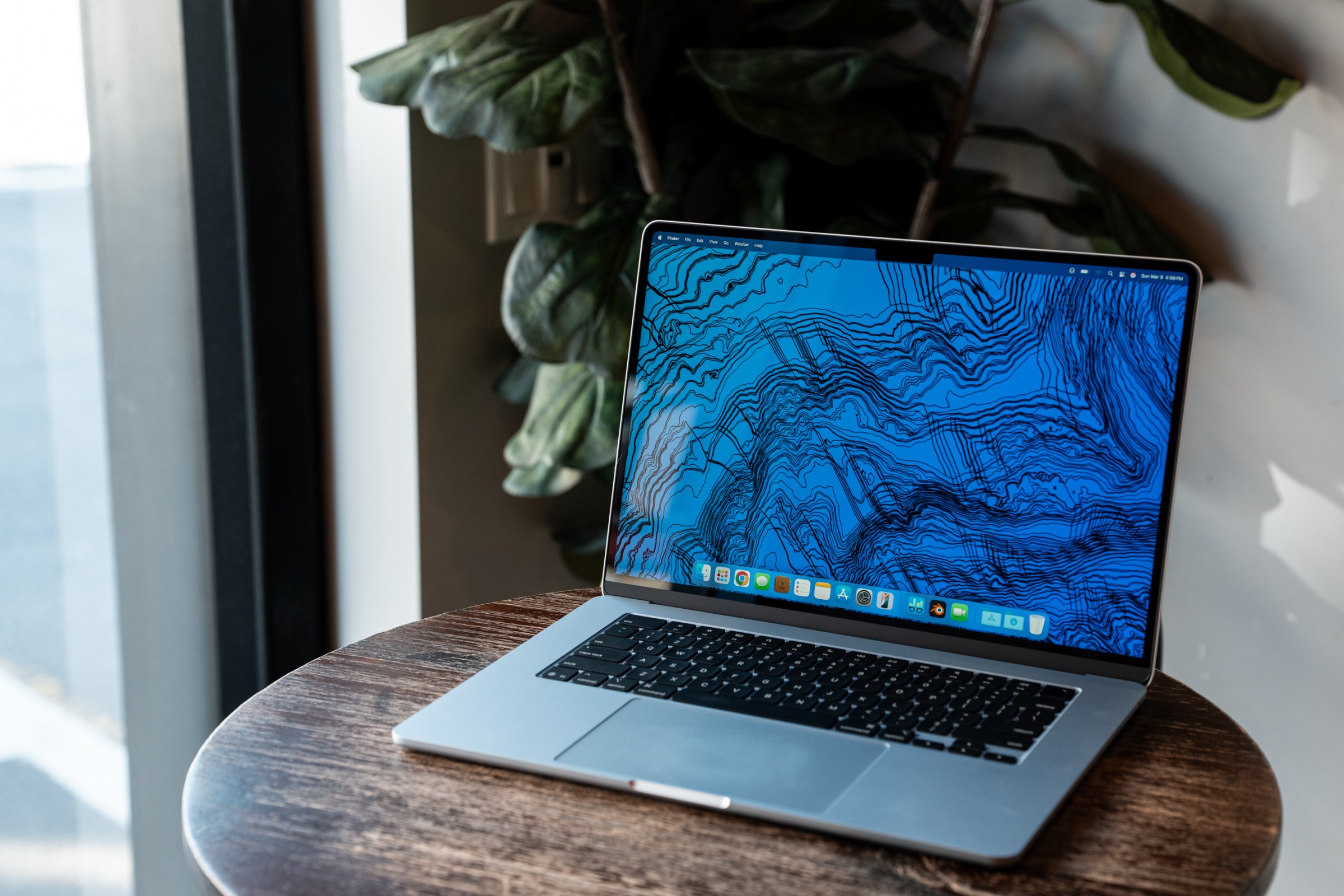
Unless you’re going into a field involving lots of graphics rendering or video editing, a MacBook Air should be more than enough computer to last through the student years. The Air is our top laptop recommendation for most people, and that includes students — particularly students in high school or starting college. Nothing else offers quite the same balance of performance, build quality, and battery life as Apple’s entry-level laptop. It’s a speedy little machine that can even handle some heftier content creation work. Its battery can easily get you through a packed day of classes. And it has the best trackpad around. The only major downside with an Air (as with all modern MacBooks) is that you can’t upgrade the storage or memory after you buy it.

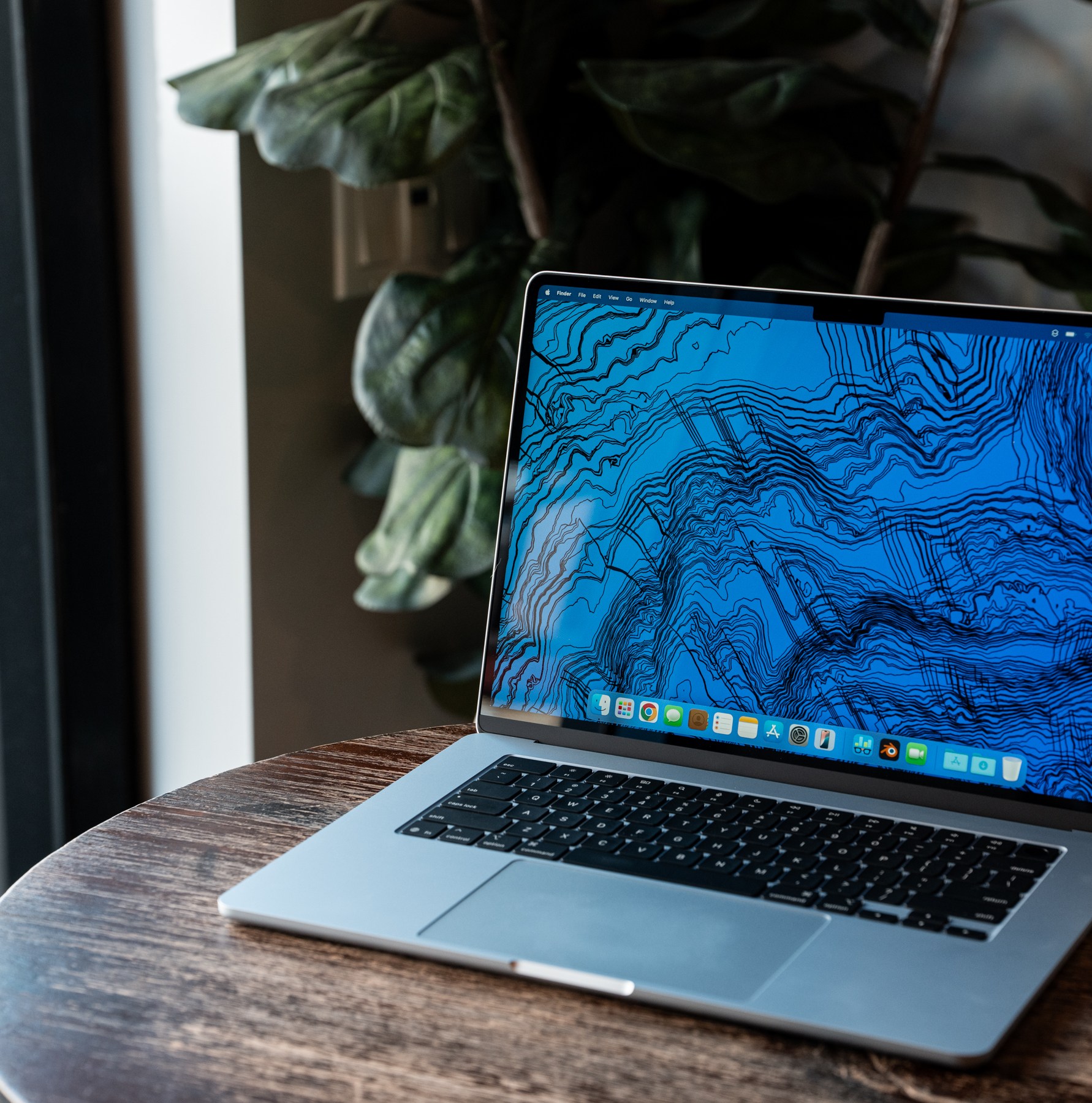
Now that MacBooks start with 16GB of RAM, even the base $999 13-inch model is excellent, if a little short on storage space at 256GB. So you may want to consider the $1,199 model with 512GB of storage. For the same price you can get the larger 15-inch model with roomier screen real estate and even better speakers, but then you’re once again starting with 256GB.
9

Verge Score

The Good

  • Easily lasts a full day on battery
  • Excellent choice for most people’s everyday needs
  • Nails the basics in a thin-and-light while feeling like a nice place to be
  • Louder speakers over its smaller counterpart

The Bad

  • Still starts with just 256GB of storage
  • Still has limited ports
  • Still prone to throttling under heavy creative tasks
Read our review of the M4 MacBook Air.

A note on older M-series Airs:

The original M1 MacBook Air can still be bought new from Walmart for $649 or less. Even at five years old, it remains a very good machine for those on tighter budgets, but it’s worth hunting for a deal on an M2 MacBook Air or newer if you can. That lingering M1 only has 8GB of RAM, and newer M2 and M3 versions have MagSafe chargers, better keyboards, and markedly better screens. You can often find one with 16GB of RAM for just a bit more than the M1, and it’ll be better for the long haul.

The best student laptop for serious content creation
9

Verge Score

The Good

  • Everything good about last year’s model but better
  • All the I/O of the pricier MacBook Pros
  • More RAM
  • New webcam is sharp and clear
  • Nano-texture display is a nice add-on

The Bad

  • Desk View webcam feature is low-res and overly distorted
  • Space black finish can still be a little smudgy
  • Apple’s price structure may still have you longing for M4 Pro / Max

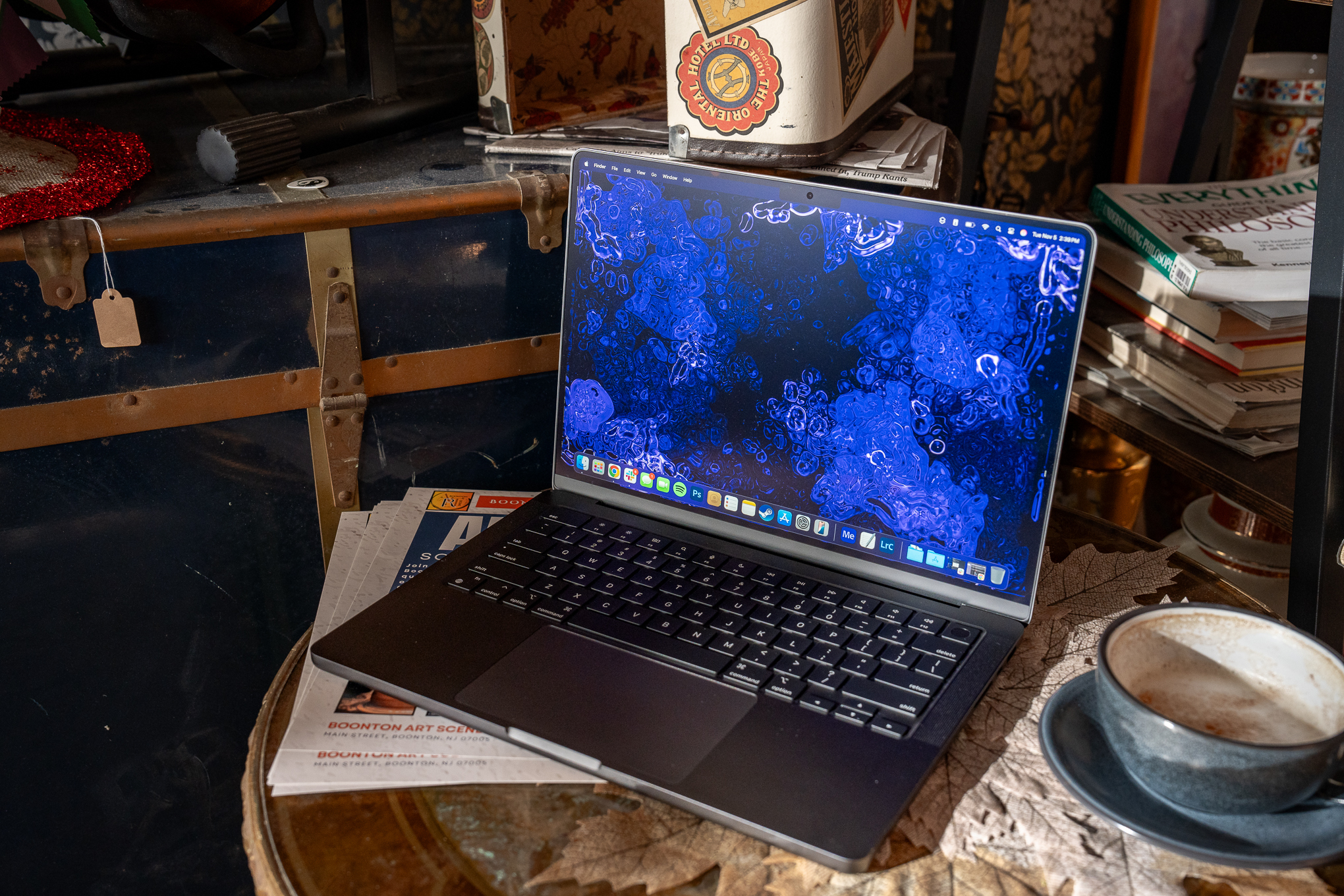
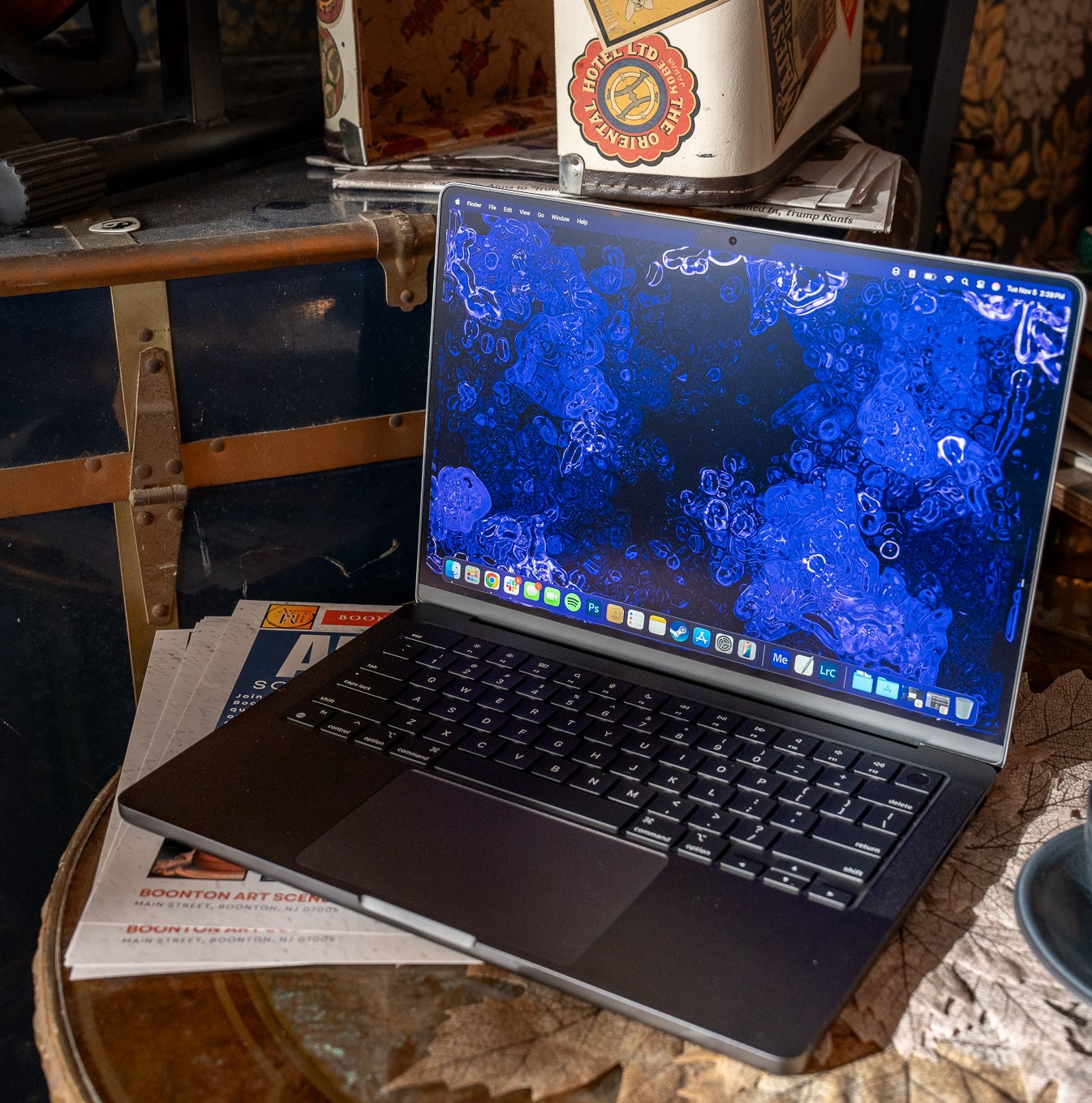
MacBook Pros have long been a staple on college campuses for students in creative fields, and the latest base version is one of the best laptops Apple has cooked up in years. Apple’s base model 14-inch MacBook Pro is a step up from the MacBook Air, with the same M4 chip. Its starting price of $1,599 is a significant jump from a $999 Air, but you get better performance and a bunch of worthwhile upgrades. The Pro has more ports than the Air, including an SD card reader and HDMI 2.1. Its screen is a nicer Mini LED panel with higher resolution and faster refresh rate. It’s got more ports, including an SD card reader and HDMI 2.1. It starts with 512GB of storage. And its battery lasts even longer.

These upgrades go a long way in making the MacBook Pro better and more futureproof for heavier creative tasks. Especially since it has a fan to cool its chip, allowing you to use content creation apps like the Adobe Creative Cloud suite for longer — the passively cooled Air starts off fast in these apps, but slows down considerably once its chip starts getting too hot.

Apple has two higher-end MacBook Pros: the 14- and 16-inch models running M4 Pro and M4 Max chips. They’re fantastic laptops with even more processing power than the base M4, plus upgrades like Thunderbolt 5 ports, but they start at $1,999 and $3,199, respectively. An M4 Pro model is a more futureproof option, but these are better fit for a working professional than a student.

Read our review of the 14-inch MacBook Pro M4.

The best modular laptops you can upgrade yourself
9

Verge Score

The Good

  • Still the repairability champ with excellent, modular port selection
  • Faster CPU performance over both Intel and previous AMD models
  • High-res 3:2 aspect ratio screen is great for productivity
  • Thin, light, and an overall great package

The Bad

  • Radeon 860M iGPU performance is a little lacking
  • Trackpad still feels a little cheap
  • Screen is a little lacking in contrast and color quality
  • Less repairable laptops offer more for similar prices or less

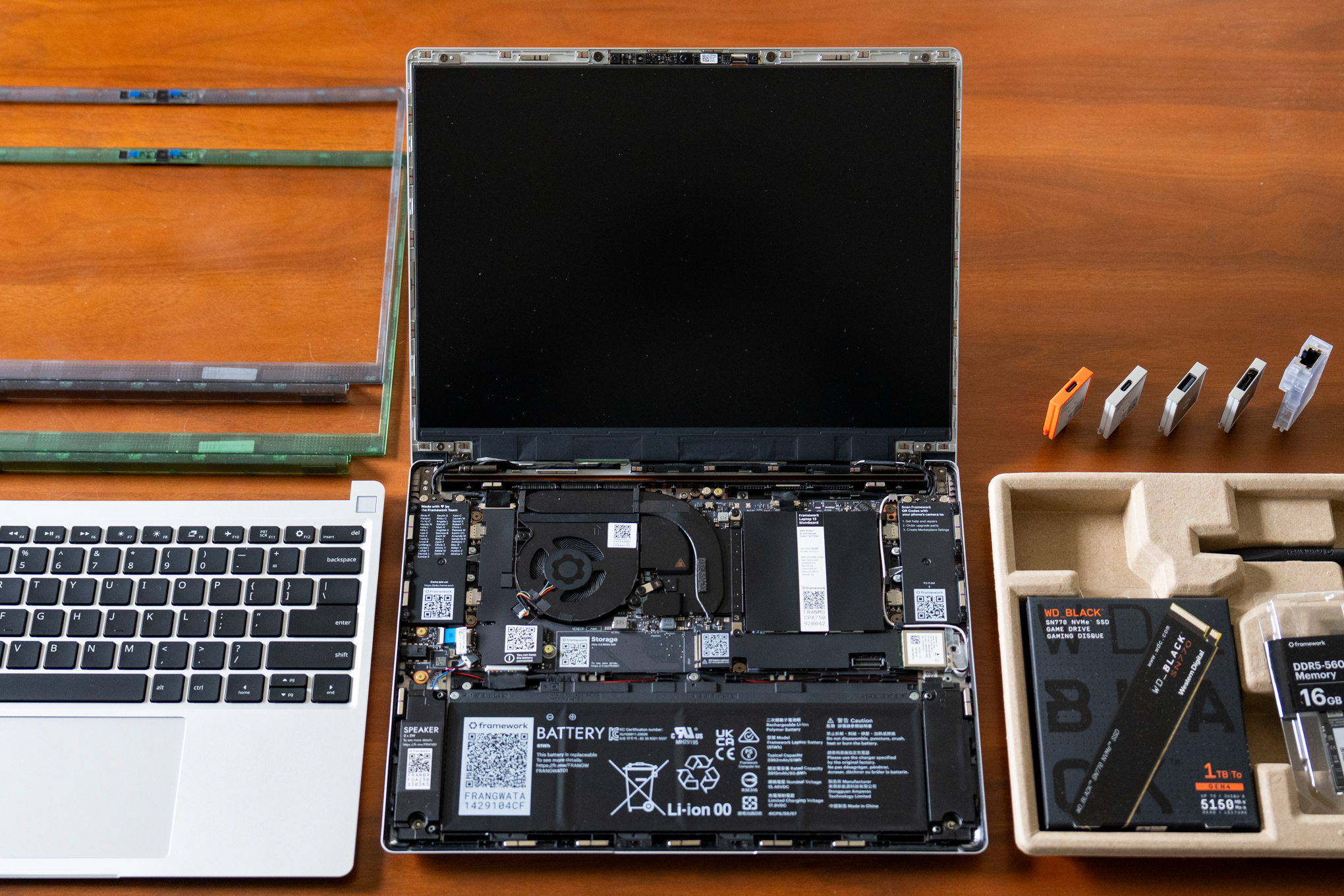
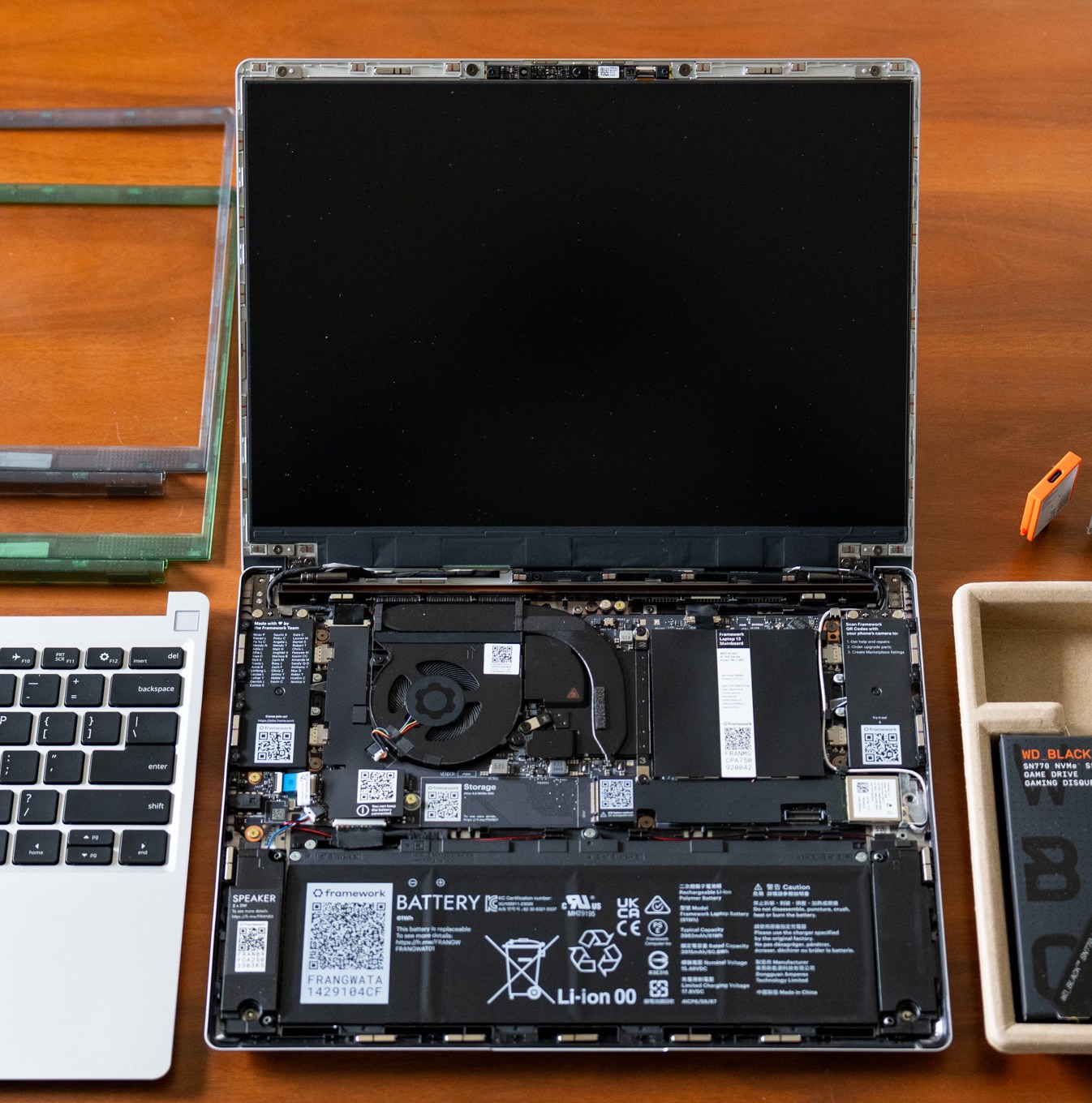
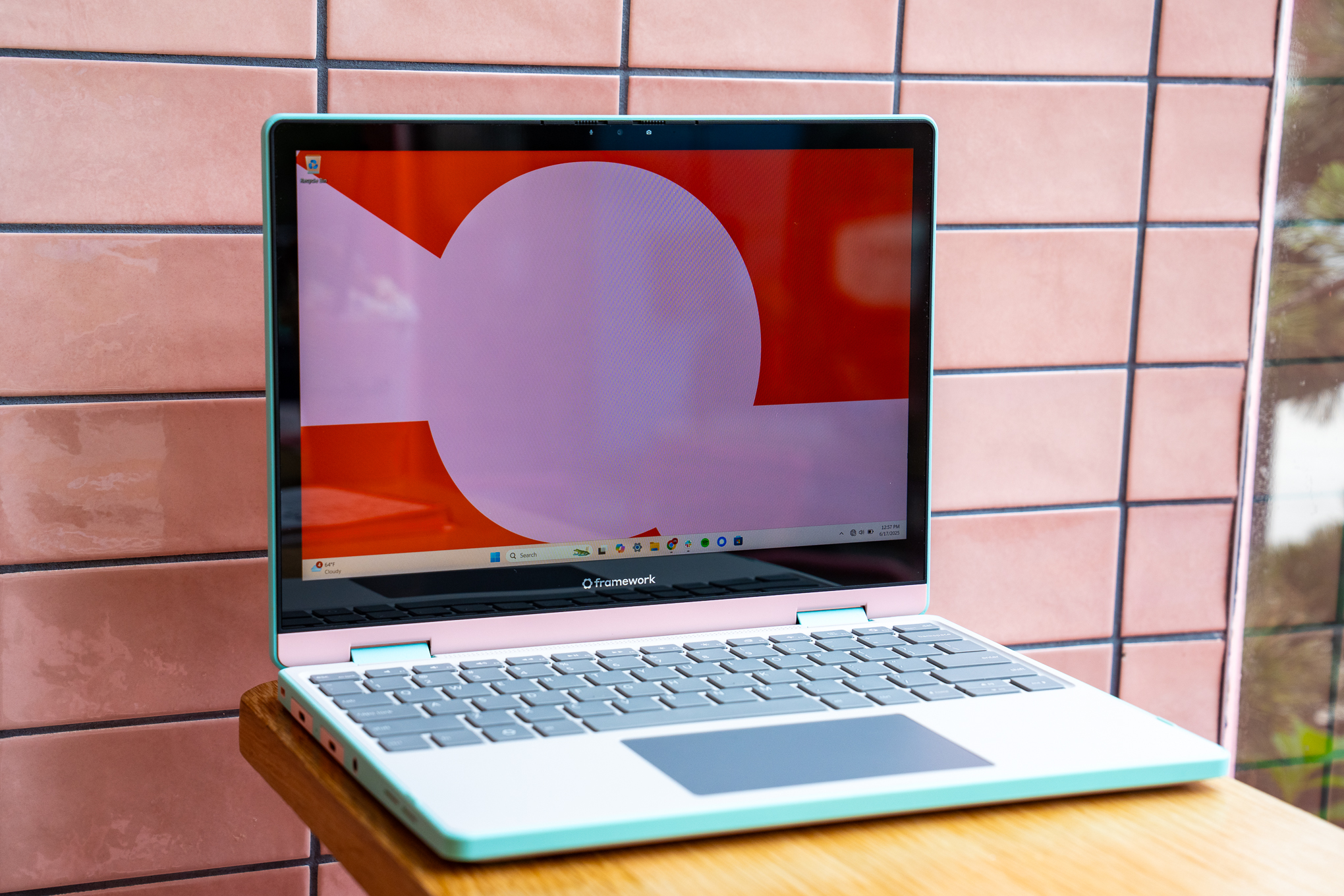
The Framework Laptop 13 and 2-in-1 Laptop 12 are notebooks that can grow and change with you. They’re easily repairable, and even years down the road you should be able to upgrade the RAM, storage, ports, and the entire mainboard and processor. They even have optional DIY editions, requiring some easy assembly — which I assure you is a joyously nerdy way to familiarize yourself with the inner workings of your laptop. There’s nothing else like them, and if you or your kid are the tinkering types it’s a fun experience for running either Windows or Linux.

But you don’t have to be going for a computer engineering degree. Even a newcomer can appreciate how Framework allows you to choose modular ports and swap them out at will. You can go all USB-C like a MacBook Air, or you can get funky by mixing and matching USB-A, DisplayPort, HDMI, SD / microSD card readers, and even an ethernet port.

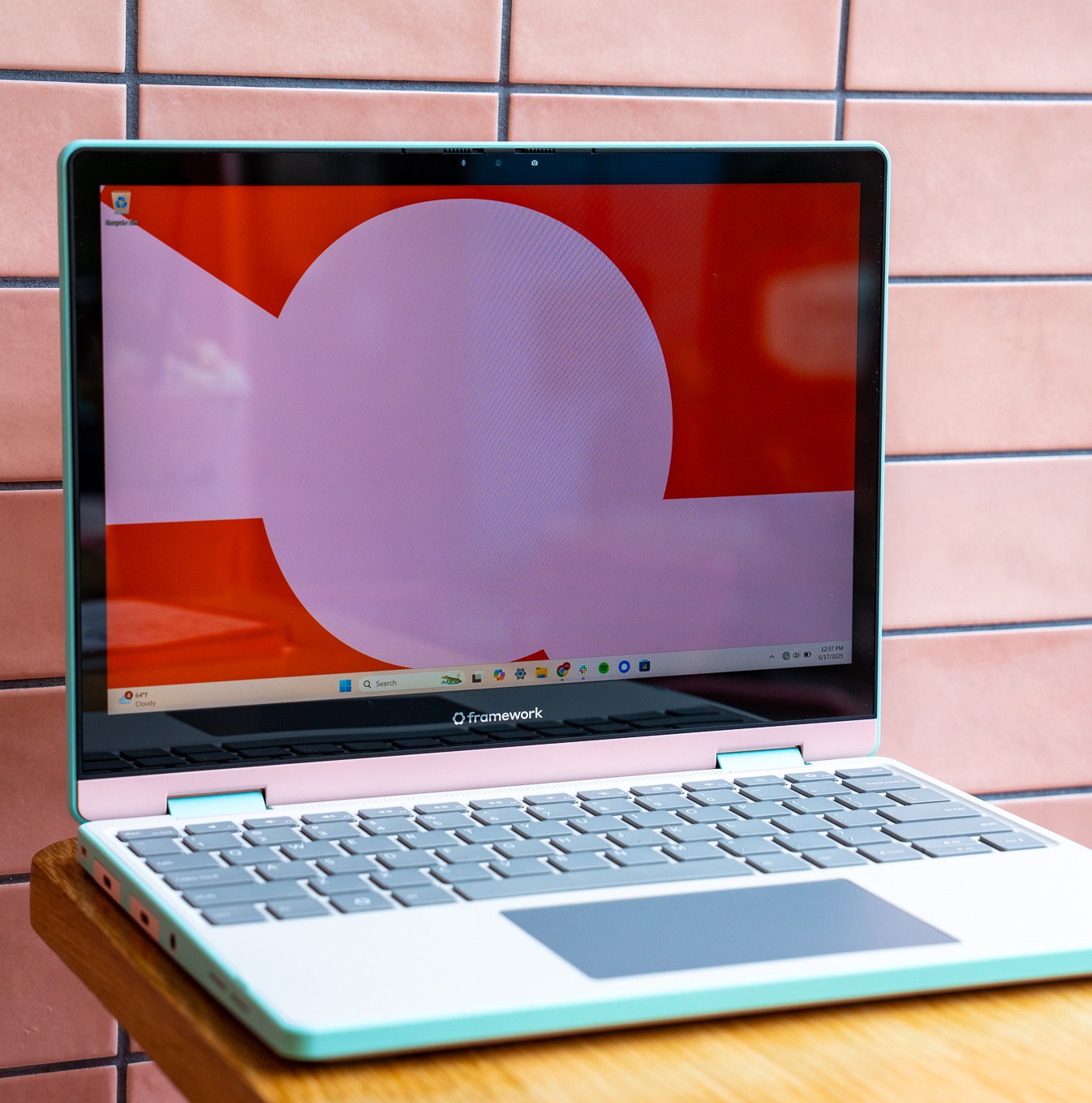
You just have to be willing to pay extra for the Frameworks’ modularity, upgradeability, and easy repairability, as they cost more than equivalent or better-specced laptops from other manufacturers. The newer Laptop 12 isn’t as good a choice for most people because of its price and older Intel chips, but its shock-resistant chassis and convertible tablet form factor make it even more uniquely appealing for younger kids.
7

Verge Score

The Good

  • Easy repairs and potential upgrades
  • Fun design
  • Rubberized TPU edges make it more resilient for kids
  • Modular ports with internal “child locks”

The Bad

  • Not exactly cheap, especially with more RAM and storage
  • Aging processor, starts with 8GB of RAM
  • Chunky bezels
  • No Windows Hello unlocking
Read our reviews of the Framework Laptop 13 and Laptop 12.

A Windows laptop or tablet with amazing battery
8

Verge Score

The Good

  • Exquisite hardware that feels great to touch and use
  • Very good keyboard and one of the best mechanical trackpads
  • Battery can stretch to 1.5 days (with native Arm apps)
  • 3:2 aspect ratio screen is ideal for productivity

The Bad

  • Webcam doesn’t support Windows Hello
  • Loss of magnetic charging port
  • Snapdragon X still has app and game compatibility issues that competing chips do not
  • Why have Home, Page Up, and Page Down keys instead of media controls?

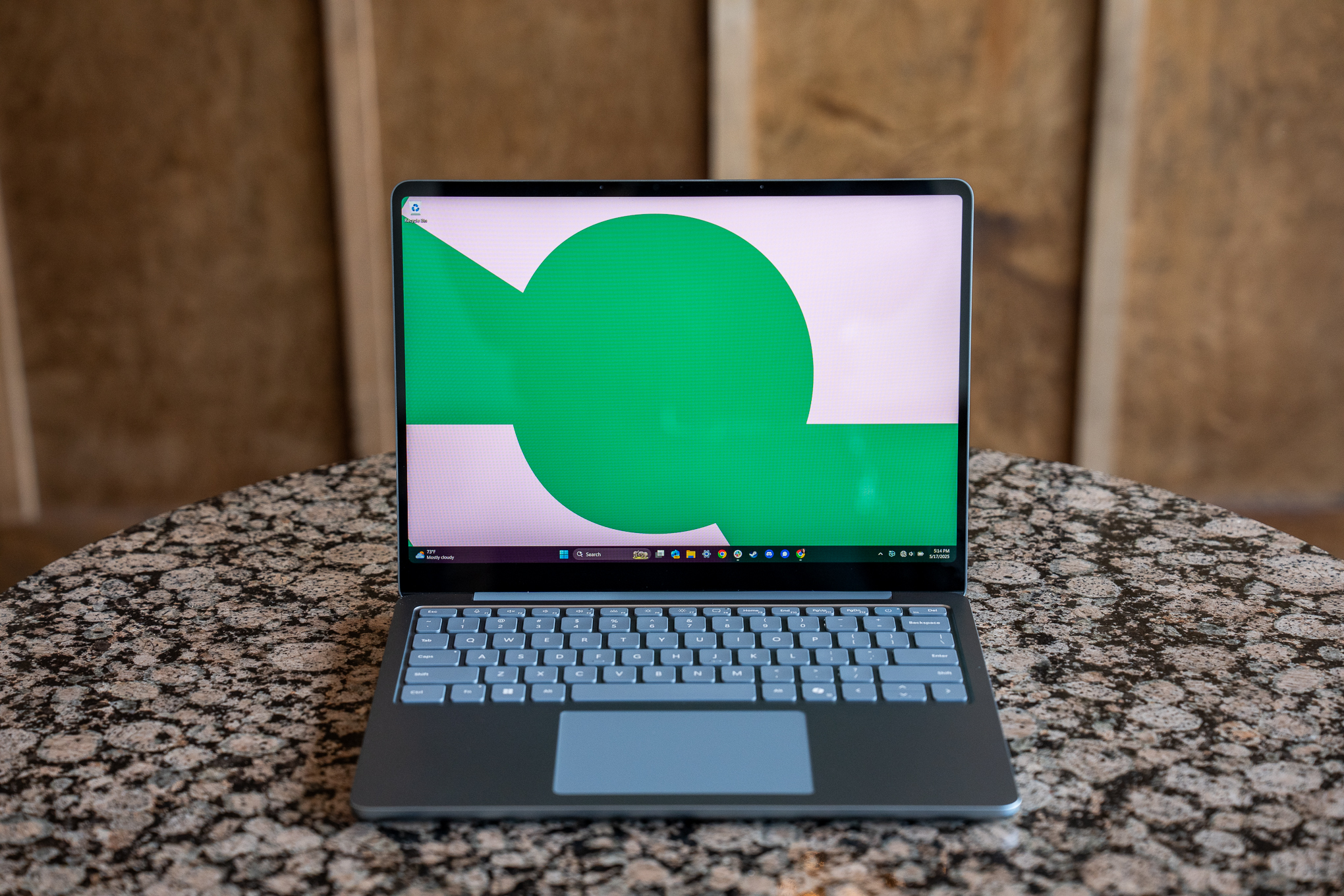
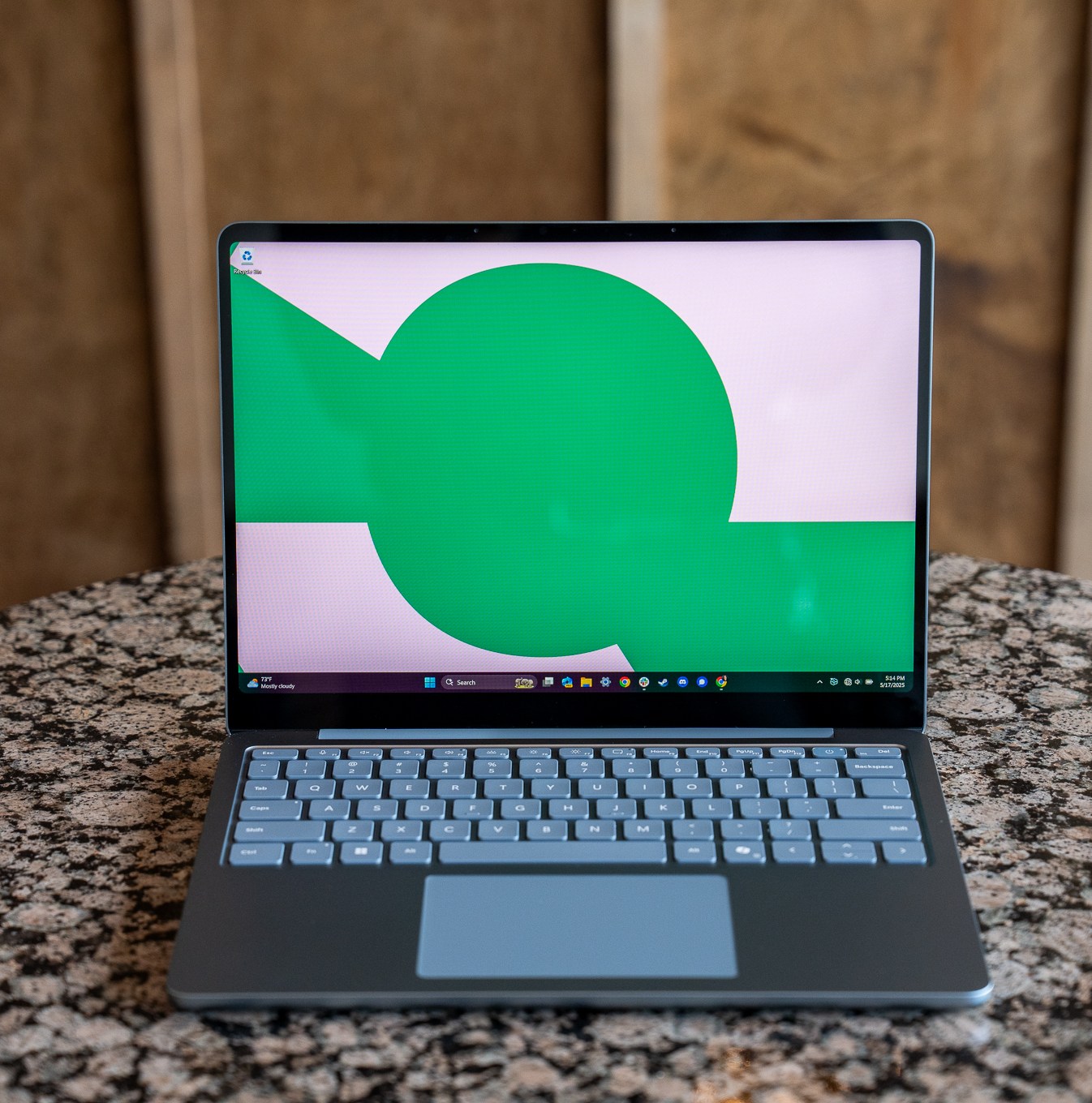
The latest, lower-cost Surfaces from Microsoft are great machines with excellent battery life, great standby times when left asleep, and solid performance. They’re Arm-based, which is what gives them that excellent battery life, but can lead to some app compatibility issues. Most common programs run fine, either natively or native-like via emulation. Just do your homework; if certain classes require specific apps, check to make sure they’ll run.

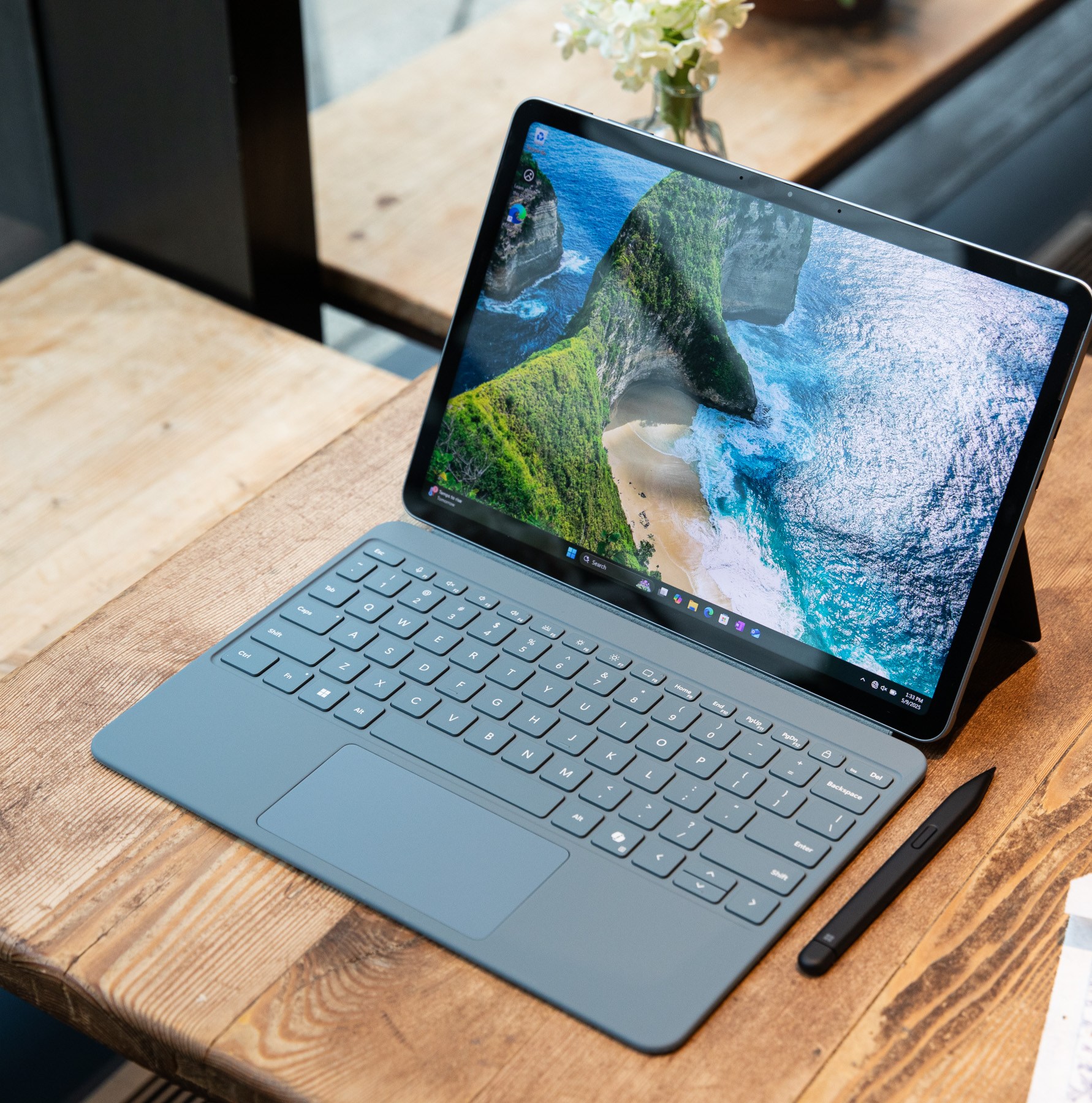
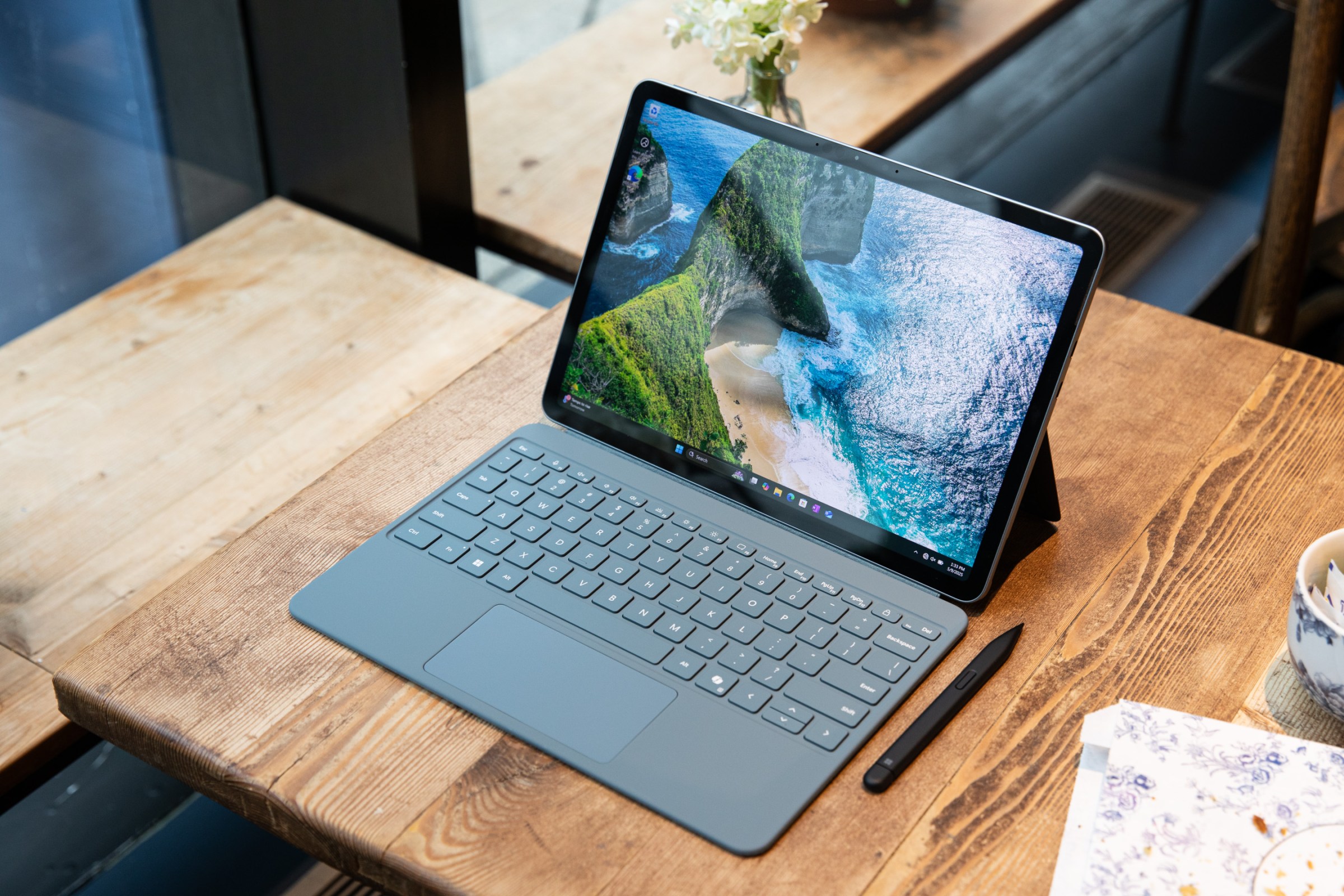
The 12-inch Surface Pro (starting at $799.99) and 13-inch Laptop (starting at $899.99) are well constructed, ultra-portable machines that feel very nice to use. Despite being the cheaper Windows laptops in this list, neither feels like a diminished experience (save for some odd design choices, like a lack of face unlock in the Laptop).

You can look at it as simply picking your preferred form factor: a traditional clamshell laptop or a convertible tablet with keyboard cover. The Laptop is the better buy, because the Surface Pro’s must-buy keyboard cover is an extra $150 (or $250 bundled with the stylus) — meaning its true starting price is around $850.
8

Verge Score

The Good

  • Beautiful fanless design
  • Great battery life
  • The keyboard is a lot sturdier

The Bad

  • Windows still needs a better UX in tablet mode
  • The thick display bezels
  • No haptic touchpad
Read our reviews of the Surface Laptop 13-inch and Surface Pro 12-inch.

The hands-down best Chromebook
9

Verge Score

The Good

  • Beautiful OLED screen, even at $649
  • Marathon battery life
  • Speedy performance with fanless design
  • Good-sounding speakers

The Bad

  • USB ports are only 5Gbps
  • Trackpad, while solid, has a slightly loud click
  • Webcam sometimes exhibits a green color cast
  • ChromeOS app compatibility / performance can still be frustrating (e.g., Zoom and Slack)

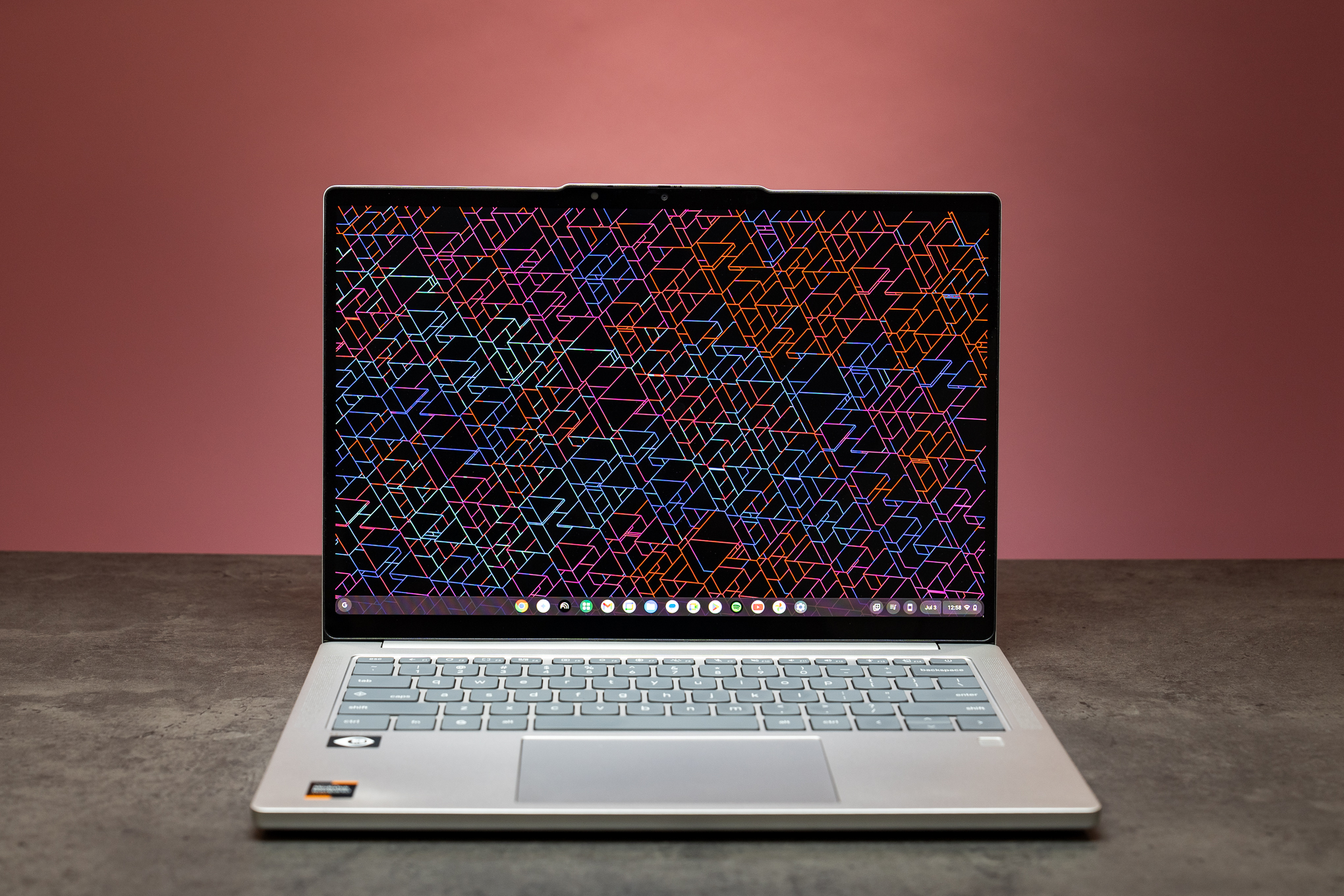
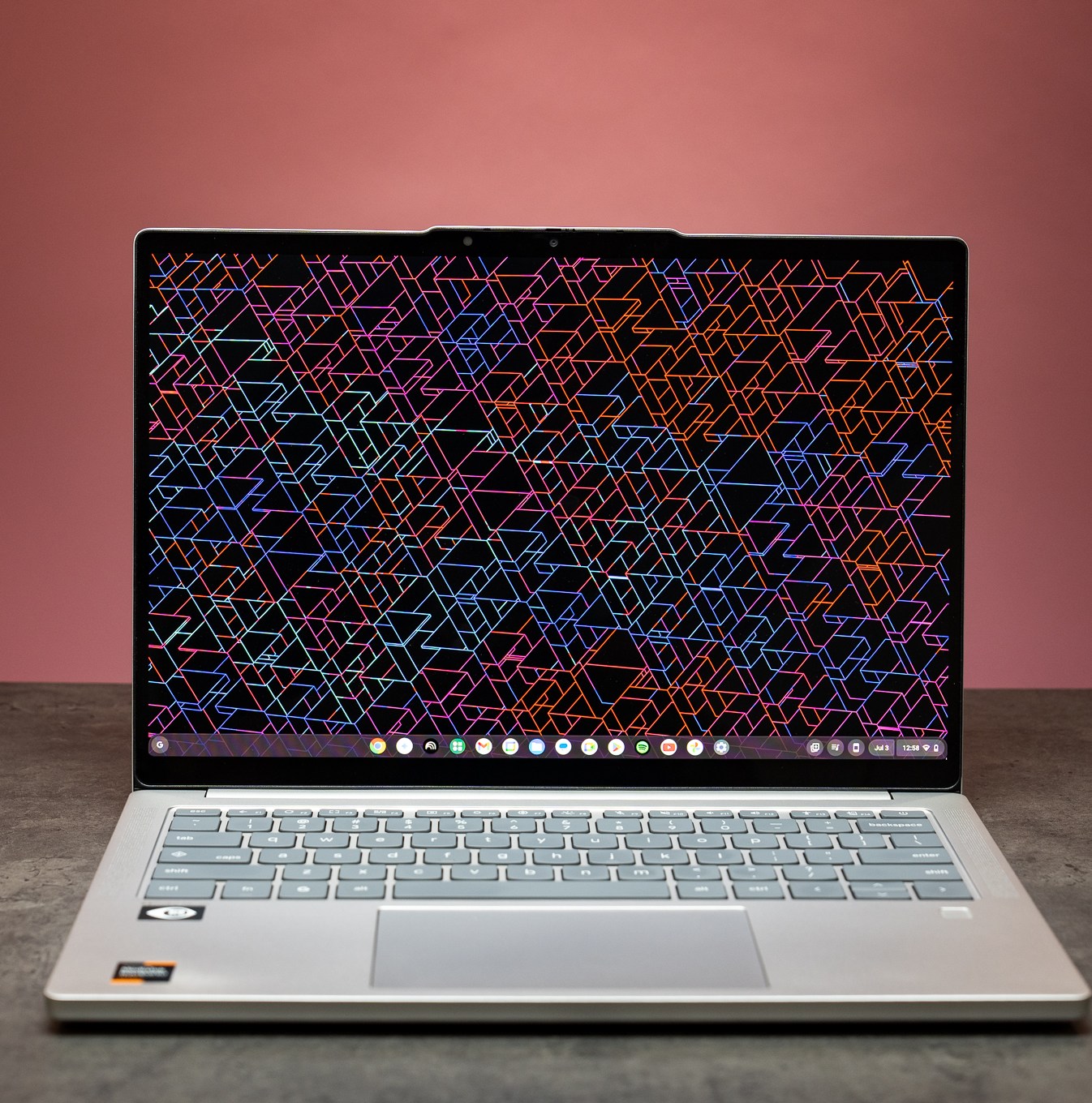
If you need or prefer a Chromebook for school and favor a traditional clamshell laptop, the Lenovo Chromebook Plus 14 is the best one. It’s a great Chromebook for older students, and a solid machine for just about anyone who wants a no-nonsense everyday computer. For $750 you get a fantastic touchscreen OLED display with deep contrast and vivid colors, a great keyboard, and marathon battery life. It’s a package that’s well built and totally silent thanks to a fanless design.

The Arm-based MediaTek processor is what gives the Lenovo its zippy performance and battery stretching into a second day of use. It can also lead to some small compatibility issues if you venture into using Linux apps (they need to be Arm compatible), but that’s unlikely to affect most users.

The Chromebook Plus 14 has some other small flaws, like lackluster 5Gbps data speeds on its USB ports and an only-okay trackpad, but it nails most everything else. And, again, paying only $750 for a 14-inch OLED panel this nice is a rare treat.

Read our review of the Lenovo Chromebook Plus 14.

The best 2-in-1 convertible Chromebook
The Good

  • The best convertible Chromebook experience
  • Speedy Thunderbolt 4 ports
  • Faster RAM than previous gen

The Bad

  • No fingerprint sensor
  • A little pricey when not discounted
  • 8GB of RAM

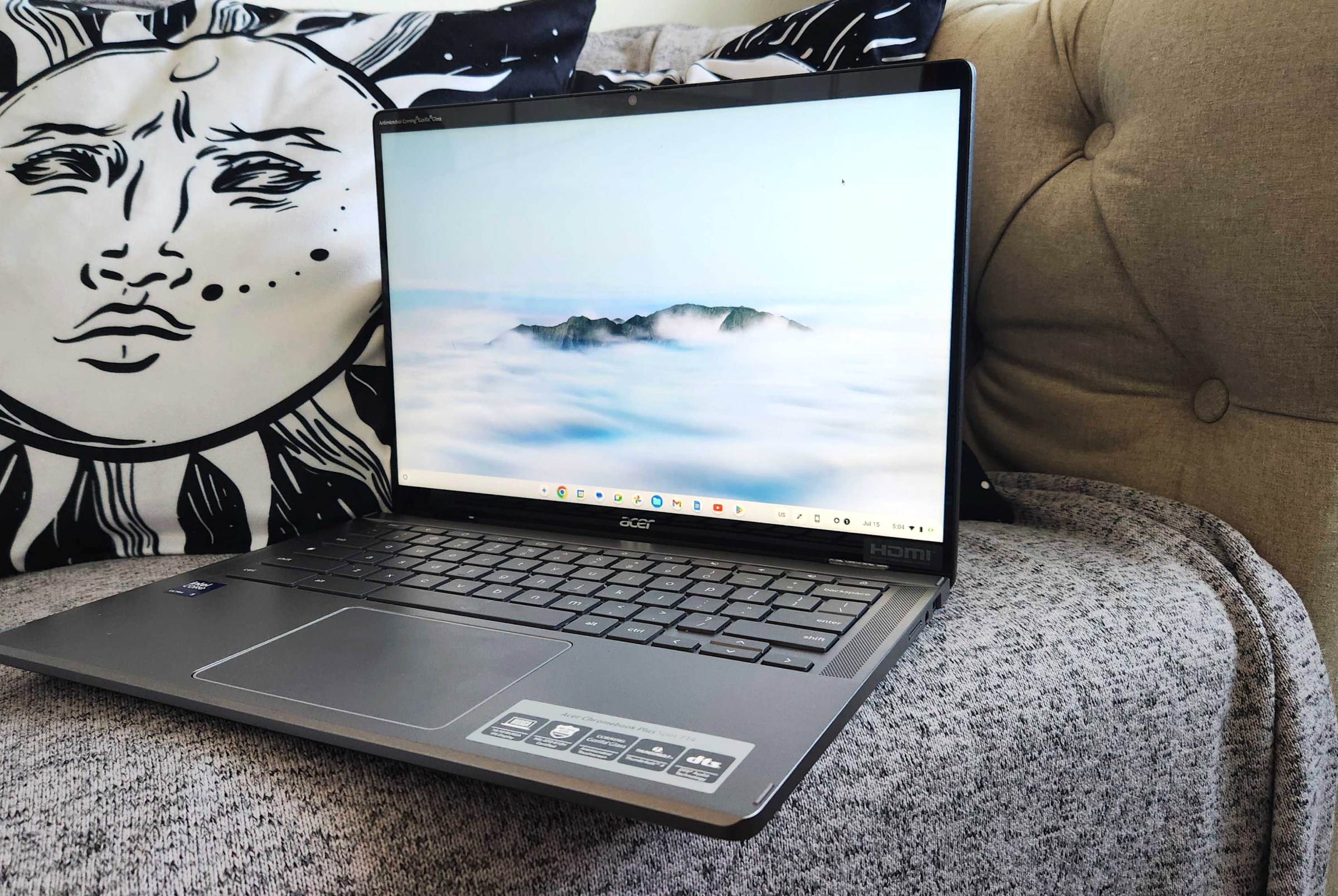
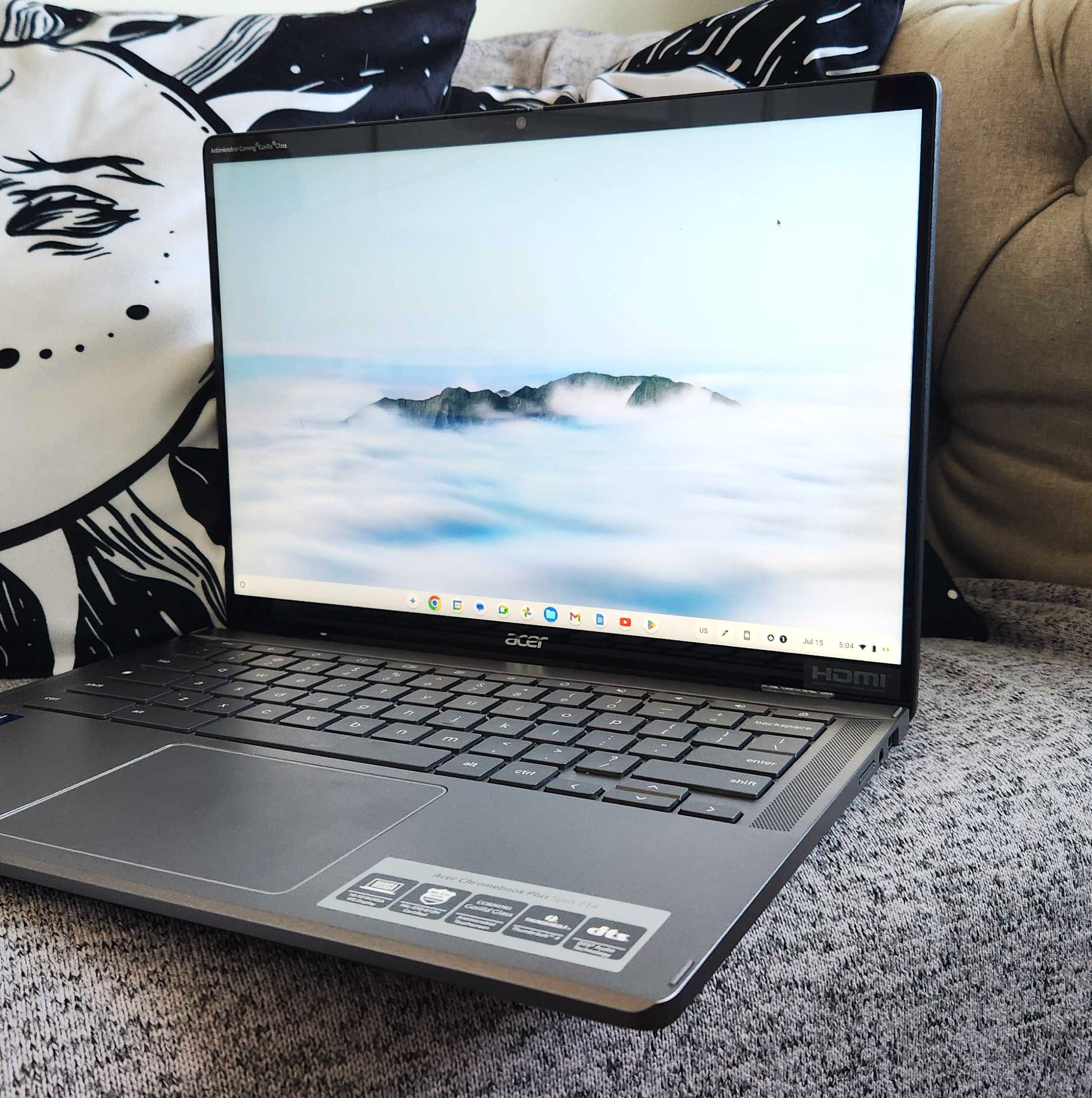
If you want a 2-in-1 convertible Chromebook, the Acer Chromebook Plus Spin 714 is your bag. The 2024 Acer may now be getting outclassed by the freshly launched Lenovo, but it’s still one of our top picks since it’s so versatile.

The Chromebook Spin 714 and its Intel processor offers a great balance of performance, battery life, and specs for the money. It has speedy Thunderbolt 4 ports, and its x86 architecture allows for free rein to install and tinker with Linux apps.

Now that this latest version of the Spin is a year old (though still current), it can occasionally be had for $200 off. So if you want a top-flight Chromebook you can find for a decent discount, the Spin is a great choice.

The best Chromebook under $400
8

Verge Score

The Good

  • Excellent look and build
  • Sharp 1080p display
  • 1080p webcam with AI features and physical shutter

The Bad

  • No touchscreen option
  • Stiff touchpad
  • Battery life could be a bit better

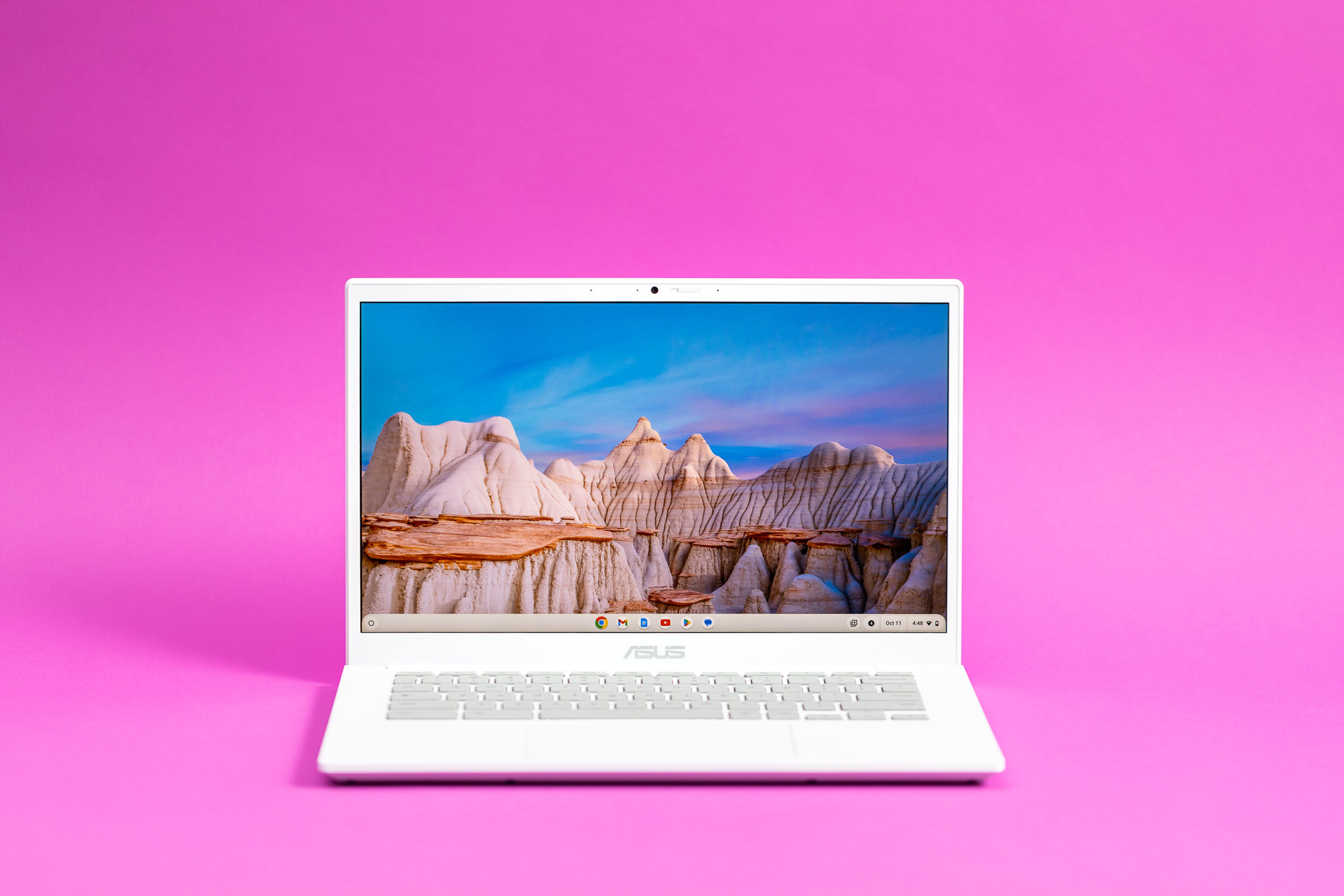
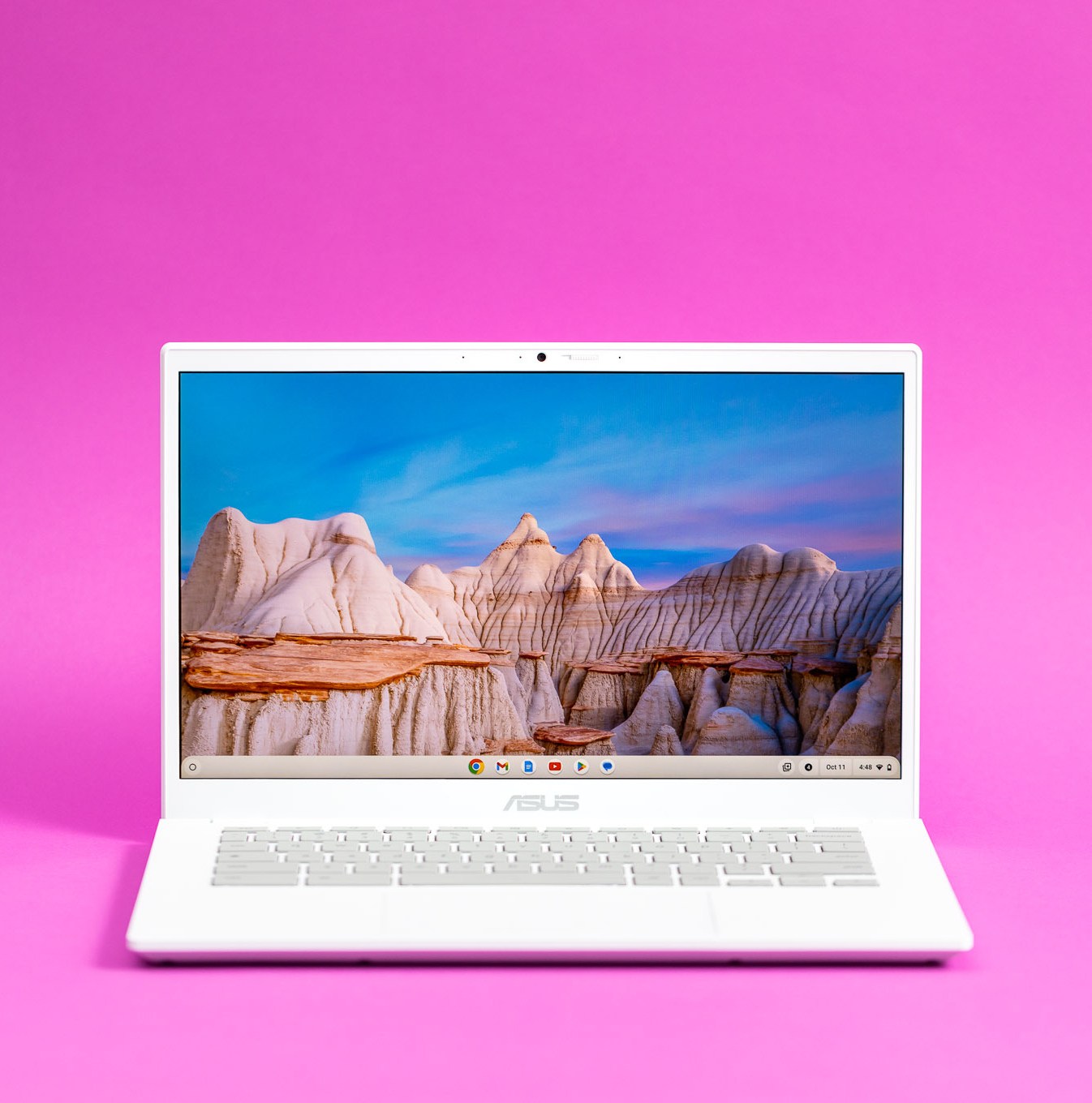
If you’re shopping for a younger student and don’t want to spend a ton, but also don’t want to risk buying something crappy, the 14-inch Asus Chromebook Plus CX34 is a safe bet. It’s one of the cheapest Chromebooks with the Plus designation, which means it meets a certain level of performance, battery life, and quality. Chromebook Plus laptops have better-than-average screens, and they should be able to last through a school day without needing a charge.

The CX34 normally costs $600 these days, but it sometimes sells for under $400. That’s the sweet spot, getting you excellent build quality, a nice screen, and a sleek design for an affordable price.

The CX34’s 1920 x 1080 / 250-nit display may feel a little cramped and dim compared to the 16:10 screens on the Acer Chromebook Plus Spin 714 and Lenovo Chromebook Plus 14, but it offers a sharp picture with minimal glare. It’s got a great keyboard that Asus claims to have tested as spill-resistant, giving a bit more peace of mind when entrusting it to a child. The Asus remains a go-to choice for something you can have younger students use that lasts some years.

Read our review of the Asus Chromebook Plus CX34.

A great higher-end Windows laptop with a big screen
8

Verge Score

The Good

  • It’s gorgeous
  • Incredibly thin and light for a 16-inch laptop
  • Great performance, especially the integrated graphics

The Bad

  • Shorter battery life than major competitors
  • StoryCube doesn’t work
  • Couldn’t get a sense of how fast the NPU really is

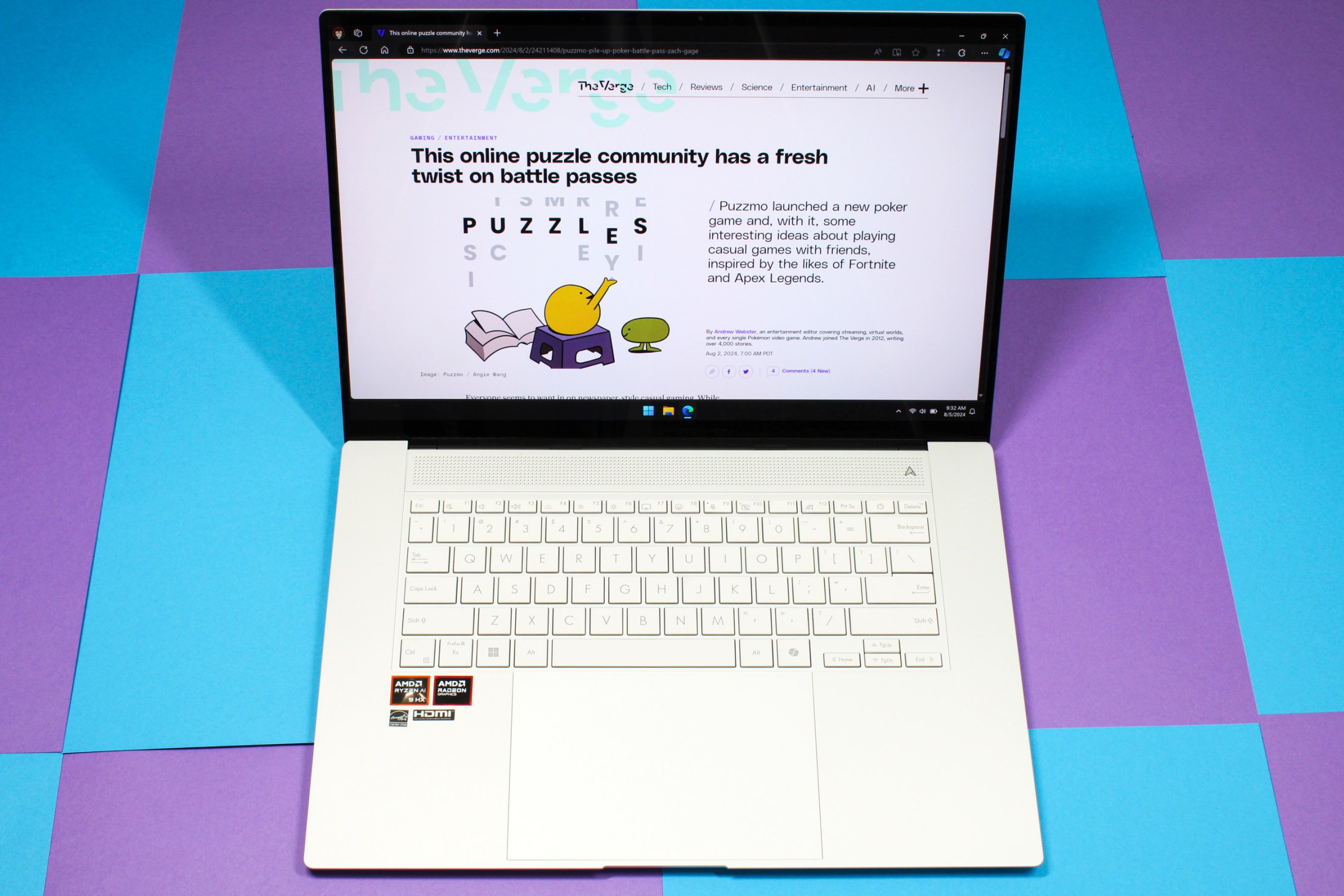
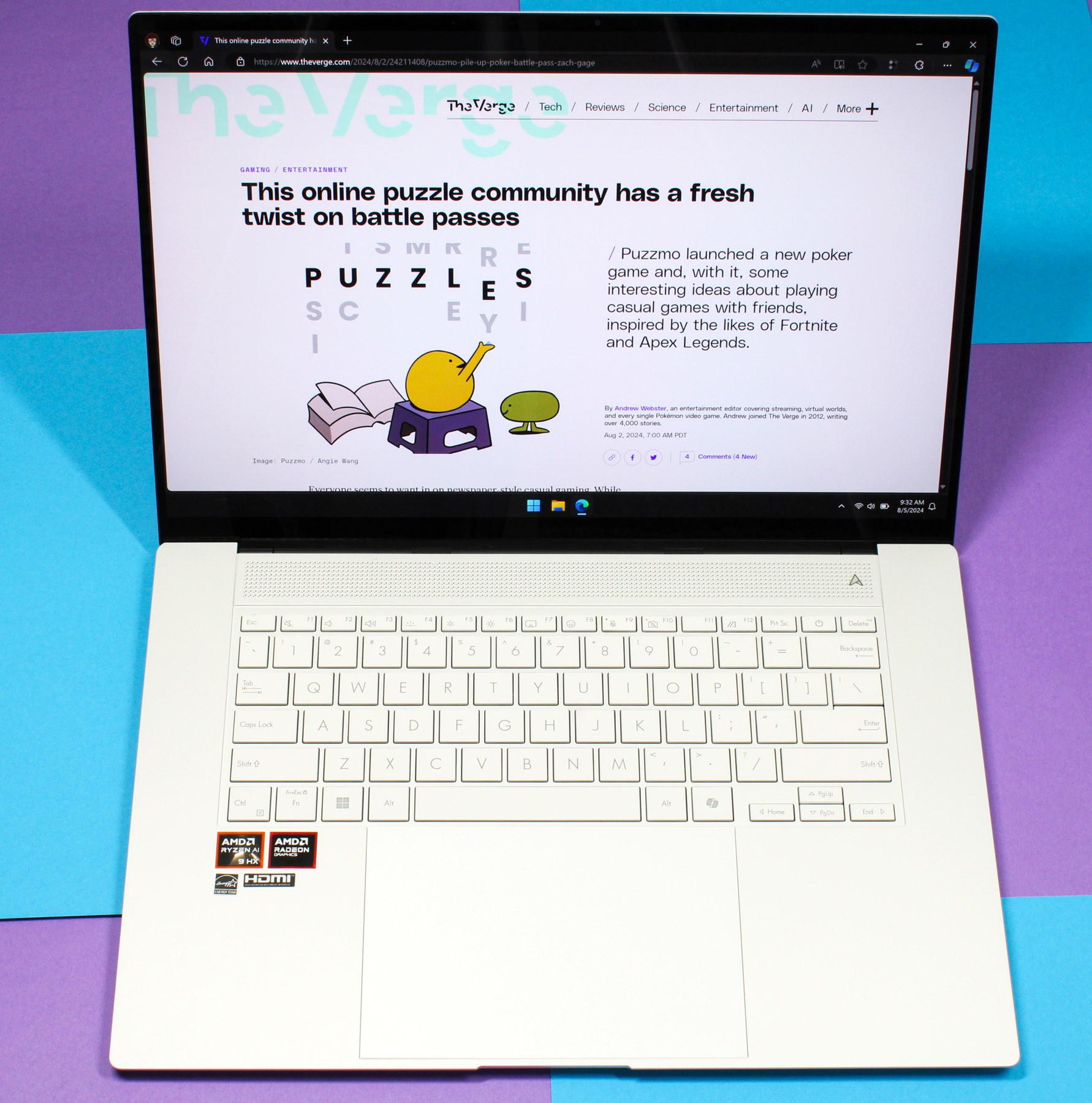
Sometimes bigger is better, and the Asus Zenbook S 16 is a total treat of a Windows thin-and-light laptop. It’s got AMD Strix Point processors that are powerful enough for even some light gaming, and the star of the show is its 2880 x 1800 16-inch OLED touchscreen capable of a smooth 120Hz refresh rate.

The Zenbook S 16 is one of the pricier options we have here, with a standard price of $1,799.99, but it sometimes goes on sale for as much as $500 off. This is a very capable option for high school or college students who need to run Windows and prefer a big screen for easier multitasking. And its thinness makes it very portable for a 16-inch machine, making it less of a hassle to tote a large laptop around campus. Asus also makes a 14-inch version — we expect it to be similar, but we haven’t tested the smaller model.

The downside of the Zenbook’s powerful chip and thin chassis is that it’s not the battery champ some of the other options here are. It’s still enough to get through an average day of classes, but it’s going to need a charge in the late afternoon if you have a lengthy sprint of back-to-back lectures or you’re cramming late into the night.

Read our review of the Asus Zenbook S 16.

The best gaming laptop for (very responsible) students
The Good

  • Balanced performance, battery life, and portability
  • OLED display
  • Programmable LED strip on the lid
  • Great keyboard and smooth trackpad

The Bad

  • Gets a bit hot and loud under load
  • Soldered RAM
  • Thermally throttles its GPUs

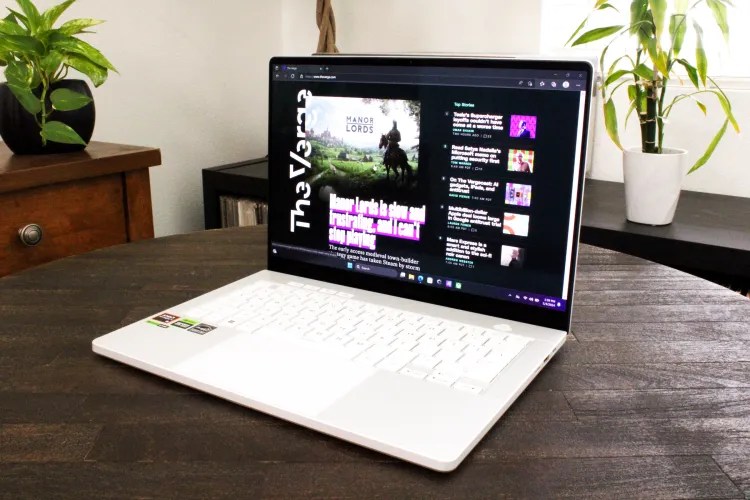
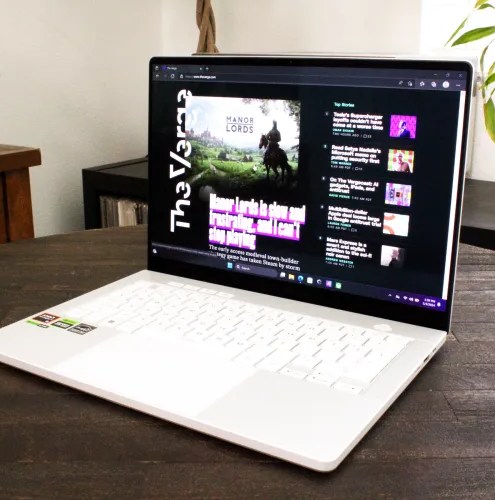
Treating your kid to a gaming laptop may seem like you’re inviting them to slack off, but if you want to splurge on one device for both schoolwork and play you can’t go wrong with Asus’ ROG Zephyrus G14. The G14 is as “normal” as gaming laptops get, with a design that doesn’t scream cringe-gamer too much (aside from some small ROG branding). Unlike many other gaming laptops, the Zephyrus has solid battery life that can get you through your day’s classes — assuming you save the gaming for when you plug in at the end of the day.

The $1,799.99 base model uses a capable AMD Ryzen 9 270 processor and discrete Nvidia GeForce RTX 5060, which is enough power to play just about any game, even the latest big-budget ones, albeit not at the highest settings.

An important part of what makes the G14 special is how good the rest of the laptop is. It’s got a crisp and lovely 14-inch OLED with 2880 x 1800 resolution and 120Hz refresh, a great keyboard, and a very good trackpad. It offers a bunch of ports, and it doesn’t run overly loud or hot when tackling the basic productivity stuff.

You’d be spoiling your kid a bit (maybe a lot of bit) with a laptop like this, but you can meet their school needs while also treating them to the world of PC gaming.

Read our buying guide featuring the Asus ROG Zephyrus G14.

Follow topics and authors from this story to see more like this in your personalized homepage feed and to receive email updates.

Most Popular

Similar Posts

  • RealSense spins out of Intel to scale its stereoscopic imaging technology

    After 14 years of developing inside of semiconductor giant Intel, RealSense is striking out on its own.

    RealSense sells cameras that use stereoscopic imaging, a process that combines two images of the same object from different angles to create depth, enhanced with infrared light. This technology helps machines like robots, drones, and autonomous vehicles have a better perception of the physical world around them. The tech is also used for facial authentication.

    “The common denominator of all of them is they live in the real, physical world,” CEO Nadav Orbach told TechCrunch. “They need to understand the surroundings in 3D and based on that, take and plan actions right in the world. And for that, they need a real-time, high-accuracy ability to understand the surrounding in 3D. And that’s what we do best.”

    Orbach joined Intel back in 2006 as a CPU architect in Israel. He started working on vision technology in 2011 before becoming the general manager of incubation and disruptive innovation in 2022 and moving to San Francisco last year.

    “We knew and understood that 3D perception was going to be big,” Orbach said about the early days of RealSense. “To be honest, we weren’t quite sure in which domain. We tried that across different market segments and different applications, all the way from gesture recognition with computers, phones, until we really found our sweet spot over the years, mostly in robotics.”

    The company works with numerous industries outside of robotics, too. Orbach said they’ve heard from fish farms looking to track the volume inside their pens. Chipotle has also used RealSense cameras, in a partnership with AI restaurant software company PreciTaste, to track when food containers are low.

    RealSense has more than 3,000 customers and has seen a surge in new interest over the last three to four years as AI has improved. With that, the applications for robotics, especially, have scaled.

    Techcrunch event

    Boston, MA
    |
    July 15

    The company realized it may have a better chance keeping up with demand — and scaling itself — if it spun out of Intel and raised its own capital, Orbach said.

    The spinout plans hatched last year and got the approval from former Intel CEO Pat Gelsinger. The company is now independent and raised a $50 million Series A funding round from Intel Capital and other strategic investors to get started on its own.

    “For me, it was exciting, to be honest,” Orbach said. “I’m a veteran executive in the company, but it’s first time that I’m, you know, I was on the other side of the table. It was a very humbling experience for me as a first-time CEO to go and and raise money.”

    RealSense will put the capital toward building out its go-to-market team and making improvements to its technology. The company is particularly focused on improving the tech so it can help improve safety during humans and robot interactions and to improve access control.

    “There is a learning curve of, you know, stepping out,” Orbach said. “I’m extremely excited about that. I’m fortunate to have a very strong team with a lot of people in my team that that have entrepreneurial experience. I feel that with my background, together with with some strong teammates, I think we have the right mix for success. And for me, it’s a dream coming true.”

  • Walmart cracks enterprise AI at scale: Thousands of use cases, one framework

    Join the event trusted by enterprise leaders for nearly two decades. VB Transform brings together the people building real enterprise AI strategy. Learn more Walmart continues to make strides in cracking the code on deploying agentic AI at enterprise scale. Their secret? Treating trust as an engineering requirement, not some compliance checkbox you tick at the…

  • America’s AI watchdog is losing its bite

    Most Americans encounter the Federal Trade Commission only if they’ve been scammed: It handles identity theft, fraud, and stolen data. During the Biden administration, the agency went after AI companies for scamming customers with deceptive advertising or harming people by selling irresponsible technologies. With yesterday’s announcement of President Trump’s AI Action Plan, that era may now be over.  In the final months of the Biden administration under chair Lina Khan, the FTC levied a series of high-profile fines and actions against AI companies for overhyping their technology and bending the truth—or in some cases making claims that were entirely false. It found that the security giant Evolv lied about the accuracy of its AI-powered security checkpoints, which are used in stadiums and schools but failed to catch a seven-inch knife that was ultimately used to stab a student. It went after the facial recognition company Intellivision, saying the company made unfounded claims that its tools operated without gender or racial bias. It fined startups promising bogus “AI lawyer” services and one that sold fake product reviews generated with AI. These actions did not result in fines that crippled the companies, but they did stop them from making false statements and offered customers ways to recover their money or get out of contracts. In each case, the FTC found, everyday people had been harmed by AI companies that let their technologies run amok.
    The plan released by the Trump administration yesterday suggests it believes these actions went too far. In a section about removing “red tape and onerous regulation,” the White House says it will review all FTC actions taken under the Biden administration “to ensure that they do not advance theories of liability that unduly burden AI innovation.” In the same section, the White House says it will withhold AI-related federal funding from states with “burdensome” regulations. This move by the Trump administration is the latest in its evolving attack on the agency, which provides a significant route of redress for people harmed by AI in the US. It’s likely to result in faster deployment of AI with fewer checks on accuracy, fairness, or consumer harm.
    Under Khan, a Biden appointee, the FTC found fans in unexpected places. Progressives called for it to break up monopolistic behavior in Big Tech, but some in Trump’s orbit, including Vice President JD Vance, also supported Khan in her fights against tech elites, albeit for the different goal of ending their supposed censorship of conservative speech.  But in January, with Khan out and Trump back in the White House, this dynamic all but collapsed. Trump released an executive order in February promising to “rein in” independent agencies like the FTC that wage influence without consulting the president. The next month, he started taking that vow to—and past—its legal limits. In March, he fired the only two Democratic commissioners at the FTC. On July 17 a federal court ruled that one of those firings, of commissioner Rebecca Slaughter, was illegal given the independence of the agency, which restored Slaughter to her position (the other fired commissioner, Alvaro Bedoya, opted to resign rather than battle the dismissal in court, so his case was dismissed). Slaughter now serves as the sole Democrat. In naming the FTC in its action plan, the White House now goes a step further, painting the agency’s actions as a major obstacle to US victory in the “arms race” to develop better AI more quickly than China. It promises not just to change the agency’s tack moving forward, but to review and perhaps even repeal AI-related sanctions it has imposed in the past four years. How might this play out? Leah Frazier, who worked at the FTC for 17 years before leaving in May and served as an advisor to Khan, says it’s helpful to think about the agency’s actions against AI companies as falling into two areas, each with very different levels of support across political lines.  The first is about cases of deception, where AI companies mislead consumers. Consider the case of Evolv, or a recent case announced in April where the FTC alleges that a company called Workado, which offers a tool to detect whether something was written with AI, doesn’t have the evidence to back up its claims. Deception cases enjoyed fairly bipartisan support during her tenure, Frazier says. “Then there are cases about responsible use of AI, and those did not seem to enjoy too much popular support,” adds Frazier, who now directs the Digital Justice Initiative at the Lawyers’ Committee for Civil Rights Under Law. These cases don’t allege deception; rather, they charge that companies have deployed AI in a way that harms people. The most serious of these, which resulted in perhaps the most significant AI-related action ever taken by the FTC and was investigated by Frazier, was announced in 2023. The FTC banned Rite Aid from using AI facial recognition in its stores after it found the technology falsely flagged people, particularly women and people of color, as shoplifters. “Acting on false positive alerts,” the FTC wrote, Rite Aid’s employees “followed consumers around its stores, searched them, ordered them to leave, [and] called the police to confront or remove consumers.”

    The FTC found that Rite Aid failed to protect people from these mistakes, did not monitor or test the technology, and did not properly train employees on how to use it. The company was banned from using facial recognition for five years.  This was a big deal. This action went beyond fact-checking the deceptive promises made by AI companies to make Rite Aid liable for how its AI technology harmed consumers. These types of responsible-AI cases are the ones Frazier imagines might disappear in the new FTC, particularly if they involve testing AI models for bias. “There will be fewer, if any, enforcement actions about how companies are deploying AI,” she says. The White House’s broader philosophy toward AI, referred to in the plan, is a “try first” approach that attempts to propel faster AI adoption everywhere from the Pentagon to doctor’s offices. The lack of FTC enforcement that is likely to ensue, Frazier says, “is dangerous for the public.”

  • Gridcare thinks more than 100 GW of data center capacity is hiding in the grid

    Hyperscalers and data center developers are in a pickle: They all want to add computing power tomorrow, but utilities frequently play hard to get, citing years-long waits for grid connections.

    “All the AI data centers are struggling to get connected,” Amit Narayan, founder and CEO of Gridcare, told TechCrunch. “They’re so desperate. They are looking for solutions, which may or may not happen. Certainly not in the five-year timelines they cite.”

    That has led many data centers to pursue what’s called “behind the meter” power sources — basically, they build their own power plants, a costly endeavor that hints at just how desperate they are for electricity.

    But Narayan knew there was plenty of slack in the system, even if utilities themselves haven’t discovered it yet. He has studied the grid for the last 15 years, first as a Stanford researcher then as a founder of another company. “How do we create more capacity when everyone thinks that there is no capacity on the grid?” he said.

    Narayan said that Gridcare, which has been operating in stealth, has already discovered several places where extra capacity exists, and it’s ready to play matchmaker between data centers and utilities.

    Gridcare recently closed an oversubscribed $13.5 million seed round, the company told TechCrunch. The round was led by Xora, Temasek’s deep tech venture firm, with participation from Acclimate Ventures, Aina Climate AI Ventures, Breakthrough Energy Discovery, Clearvision, Clocktower Ventures, Overture Ventures, Sherpalo Ventures, and WovenEarth.

    For Narayan and his colleagues at Gridcare, the first step to finding untapped capacity was to map the existing grid. Then the company used generative AI to help forecast what changes might be implemented in the coming years. It also layers on other details, including the availability of fiber optic connections, natural gas, water, extreme weather, permitting, and community sentiment around data center construction and expansion. 

    Techcrunch event

    San Francisco
    |
    October 27-29, 2025

    “There are 200,000-plus scenarios that you have to consider every time you’re running this study,” Narayan said.

    To make sure it’s not running afoul of regulations, Gridcare then takes that data and weighs it against federal guidelines that dictate grid usage. Once it finds a spot, it starts talking with the relevant utility to verify the data.

    “We’ll find out where the maximum bang for the buck is,” Narayan said.

    At the same time, Gridcare works with hyperscalers and data center developers to identify where they are looking to expand operations or build new ones. “They have already told us what they’re willing to do. We know the parameters under which they can operate,” he said.

    That’s when the matchmaking begins.

    Gridcare sells its services to data center developers, charging them a fee based on how many megawatts of capacity the startup can unlock for them. “That fee is significant for us, but it’s negligible for data centers,” Narayan said.

    For some data centers, the price of admission might be forgoing grid power for a few hours here and there, relying on on-site backup power instead. For others, the path might be clearer if their demand helps green-light a new grid-scale battery installation nearby. In the future, the winner might be the developer that is willing to pay more. Utilities have already approached Gridcare inquiring about auctioning access to newfound capacity.

    Regardless of how it happens, Narayan thinks that Gridcare can unlock more than 100 gigawatts of capacity using its approach. “We don’t have to solve nuclear fusion to do this,” he said.

    Update: Corrected spare capacity on the grid to gigawatts from megawatts.

  • Best Noise-Canceling Headphones: Sony, Bose, Apple, and More

    Honorable MentionsNow that the majority of new headphones and earbuds offer at least a modicum of noise canceling, it’d be impossible (and unproductive) to list everything we like above. If you haven’t yet found your fit, here are more favorites worth considering.Beyerdynamic Amiron 300 for $280: These simple-looking earbuds (8/10, WIRED Recommends) are a great way to experience quiet luxury. They have 10 hours of battery life with noise canceling engaged, and they have some of the best-sounding drivers for vocals I’ve heard in any earbuds.Sony WF-1000XM5 earbuds for $298: Sony’s fifth-generation flagship earbuds (7/10, WIRED Recommends) slim down while stepping up. These buds are smaller and slicker (maybe too slick when it comes to grabbing them) than the previous XM4 buds. As before, they provide great sound and noise canceling that outduels plenty of options, with a cost to match. In true Sony style, they serve up a truckload of adaptive features and EQ controls while retaining a solid eight hours of playback time per charge with ANC and 12 hours without it. —Ryan WaniataSoundcore Life Q30 for $60-85: Anker’s Soundcore line is nothing if not value-conscious, and the Life Q30 provide an embarrassing list of extras for their bargain-basement pricing. You’ll get clear and warm sound, great features, tons of battery life, and noise canceling that gets the job done even on a long flight, though it can’t keep up with flagship pairs. It’s hard to complain when they cost hundreds less, especially with sale pricing that sometimes drops to around $50.Sony WH-1000XM4 for $250-350: Sony’s WH-1000X lineup has produced some of the best noise-canceling headphones for nearly a decade, and the aging WH-1000XM4 (9/10, WIRED Recommends) are no exception. They periodically go on sale for under $300, but it’s getting harder to find them below full price, which is tough for a five-year-old model.Bowers & Wilkins Pi8 Earbuds for $400: Bowers & Wilkins’ Pi8 (8/10, WIRED Recommends) offer a sleek, comfortable design, solid (albeit not Bose-beating) noise canceling, and great sound. Call quality is also excellent, which makes these perhaps the perfect business-class earbuds, though their hefty price won’t appeal to everyone.Bowers and Wilkins PX7 S2e for $400: The Px7 S2e feature upgraded audio quality for fantastic sound in stylish and sophisticated design. They’re also among the most comfortable headphones we’ve tested, but their noise canceling doesn’t rise to the level of the top players for the money.Beyerdynamic Aventho 300 for $400: These over-ears from Beyerdynamic (7/10, WIRED Recommends) have the brand’s classic studio sound, with a tight crisp high range and punchy lows. The downside is that they don’t cancel noise quite as well as models from Sony, Bose, and others above. Still, they sound great and are worth considering, especially if you can snag them on sale.Soundcore Space A40 for $60: Another top value buy from Anker’s Soundcore brand, the Space A40 (8/10, WIRED Recommends) are some of our favorite cheap earbuds, especially as their price continues to fall. You’ll find a classy design, lots of features, quality sound, and great noise canceling for their class.Apple Beats Fit Pro for $199: The Beats Fit Pro are an aging but still knockout pair of wireless buds, with great sound, easy-access physical buttons, and solid noise canceling to boot. Add to that six hours of battery life, spatial audio compatibility with Apple Music and other services, and you’ve got one of the best pairs of earbuds ever “designed in California.”Epos/Sennheiser Adapt 660 for $210: Want excellent sound, a comfortable fit, and high-quality noise-canceling tech for less than what you’d pay for Sony or Bose headphones? Check out this collaboration between Epos and Sennheiser. The Epos/Sennheiser Adapt 660 (8/10, WIRED Recommends) sound fantastic and are some of the lightest noise-canceling headphones I’ve ever worn. They also feature excellent microphones for great silence on calls and Zooms.

  • Obvio’s stop sign cameras use AI to root out unsafe drivers

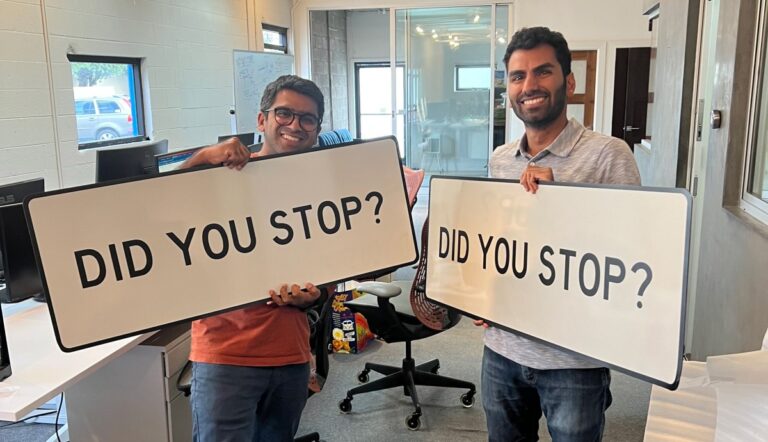
    American streets are incredibly dangerous for pedestrians. A San Carlos, California-based startup called Obvio thinks it can change that by installing cameras at stop signs — a solution the founders also say won’t create a panopticon. 

    That’s a bold claim at a time when other companies like Flock have been criticized for how its license plate-reading cameras have become a crucial tool in an overreaching surveillance state. 

    Obvio founders Ali Rehan and Dhruv Maheshwari believe they can build a big enough business without indulging those worst impulses. They’ve designed the product with surveillance and data-sharing limitations to ensure they can follow through with that claim.

    They’ve found deep pockets willing to believe them, too. The company has just completed a $22 million Series A funding round led by Bain Capital Ventures. Obvio plans to use those funds to expand beyond the first five cities where it’s currently operating in Maryland. 

    Rehan and Maheshwari met while working at Motive, a company that makes dashboard cameras for the trucking industry. While there, Maheshwari told TechCrunch the pair realized “a lot of other normal passenger vehicles are awful drivers.” 

    The founders said they were stunned the more they looked into road safety. Not only were streets and crosswalks getting more dangerous for pedestrians, but in their eyes, the U.S. was also falling behind on enforcement. 

    [embedded content]

    “Most other countries are actually pretty good at this,” Maheshwari said. “They have speed camera technology. They have a good culture of driving safety. The U.S. is actually one of the worst across all the modern nations.”

    Maheshwari and Rehan began studying up on road safety by reading books and attending conferences. They found that people in the industry gravitated toward three general solutions: education, engineering, and enforcement. 

    In their eyes, those approaches were often too separated from each other. It’s hard to quantify the impact of educational efforts. Local officials may try to fix a problematic intersection by, say, installing a roundabout, but that can take years of work and millions of dollars. And law enforcement can’t camp out at every stop sign.

    Rehan and Maheshwari saw promise in combining them. 

    The result is a pylon (often brightly-colored) topped with a solar-powered camera that can be installed near almost any intersection. It’s designed not to blend in — part of the education and awareness aspect — and it’s also carefully engineered to be cheap and easy to install.

    The on-device AI is trained to spot the worst types of stop sign or other infractions. (The company also claims on its website it can catch speeding, crosswalk violations, illegal turns, unsafe lane changes, and even distracted driving.) When one of these things happen, the system matches a car’s license plate to the state’s DMV database. 

    All of that information — the accuracy of the violation, the license plate — is verified by either Obvio staff or contractors before it’s sent to law enforcement, which then has to review the infractions before issuing a citation.

    Obvio gives the tech to municipalities for free and makes money from the citations. Exactly how that citation revenue will get split between Obvio and the governments will vary from place to place, as Maheshwari said regulations about such agreements differ by state.

    That clearly creates an incentive for increasing the number of citations. But Rehan and Maheshwari said they can build a business around stopping the worst offenses across a wide swath of American cities. They also said they want Obvio to remain present in — and responsive to — the communities that use their tech.

    “Automated enforcement should be used in conjunction with community advocacy and community support, it shouldn’t be this camera that you put up that does revenue grab[s] and gotchas,” Maheshwari said. The goal is to “start using these cameras in a way to warn and deter the most egregious drivers [so] you can actually create communitywide support and behavior change.”

    Cities and their citizens “need to trust us,” Maheshwari said. 

    There’s also a technological explanation for why Obvio’s cameras may not become an overpowered surveillance tool for law enforcement beyond their intended use.

    Obvio’s camera pylon records and processes its footage locally. It’s only when a violation is spotted that the footage leaves the device. Otherwise, all other footage of vehicles and pedestrians passing through a given intersection stays on the device for about 12 hours before it gets deleted. (The footage is also technically owned by the municipalities, which have remote access.)

    This doesn’t eliminate the chance that law enforcement will use the footage to surveil citizens in other ways. But it does reduce that chance.

    That focus is what drove Bain Capital Ventures partner Ajay Agarwal to invest in Obvio.

    “Yes, in the short term, you can maximize profits, and erode those values, but I think over time, it will limit the ability of this company to be ubiquitous. It’ll create enemies or create people who don’t want this,” he told TechCrunch. “Great founders are willing to sacrifice entire lines of business, frankly, and lots of revenue, in pursuit of the ultimate mission.”

Leave a Reply

Your email address will not be published. Required fields are marked *